
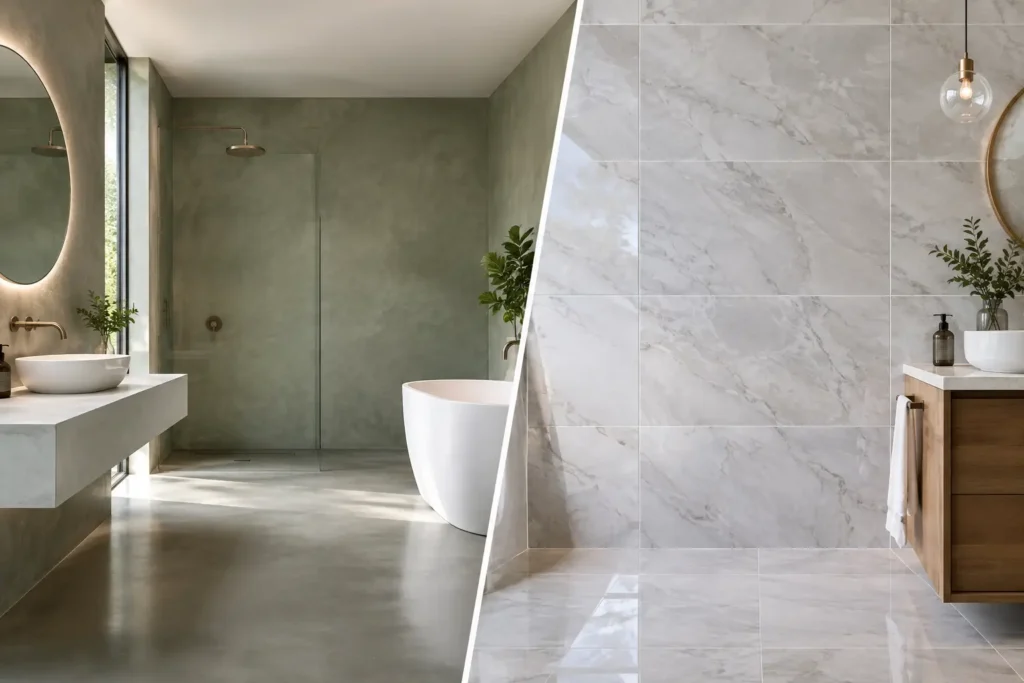
A shower wall should not be an afterthought. It is one of the largest visual surfaces in the room, catches the hardest daily use, and can either make a scheme feel composed or interrupt it with busy grout lines. When weighing up resin walls vs tiles, the real choice is not simply contemporary versus traditional. It is about how you want the room to look, feel and perform for years to come.
Tiles remain a trusted, familiar finish with extraordinary choice in size, pattern and price. Resin offers something different: a continuous, design-led surface that can be tailored in colour, texture and movement. Both can create a beautiful bathroom, kitchen or feature space. The best answer depends on the detail of your project.
Resin walls vs tiles: the visual difference
Tiles create rhythm. Whether you choose crisp large-format porcelain, handmade-look ceramics or a patterned design, every joint contributes to the finished composition. This can bring character and structure to a wall, particularly in period homes, eclectic kitchens and spaces where you want a recognisable material finish.
Resin creates calm. Applied as a continuous coating, it removes the grid of grout lines and lets the wall read as one considered plane. In a compact en suite, this can make the room feel more generous. In an open-plan kitchen or a reception space, it creates a refined backdrop that allows joinery, lighting and furniture to take centre stage.
That does not mean resin has to be plain. Decorative epoxy can be developed with soft tonal variation, terrazzo-inspired aggregate, metallic depth or a concrete-effect character. The finish can be quiet and architectural or deliberately expressive. Because it is crafted in situ, the final result has a bespoke quality that off-the-shelf tile ranges cannot always achieve.
The trade-off is predictability. A tile sample usually gives a very clear indication of the finished surface. Resin samples are essential, but hand-applied finishes can carry natural variation across a larger wall. For many clients, that artistry is exactly the appeal. For someone seeking a perfectly repeated pattern, tiles may be the more comfortable choice.
Cleaning and everyday maintenance
Grout is often the deciding factor in bathrooms and splash-prone kitchens. Even when sealed, grout joints can hold soap residue, limescale and cooking splashes. Light grout can gradually discolour, while textured tiles create more edges for dirt to settle around. Cleaning is not difficult, but it is more detailed.
A properly specified resin wall has no grout lines. Its smooth, non-porous surface is simple to wipe down with a soft cloth and a suitable pH-neutral cleaner. That ease of care is particularly valuable in shower surrounds, utility rooms, hospitality washrooms and busy family homes where the surface needs to look good without constant attention.
Neither material is entirely maintenance-free. Abrasive pads, harsh bleach and aggressive descaling products can dull or damage some resin finishes, just as they can affect tile grout and glazed surfaces. Resin should be cleaned according to the system used, especially where a decorative topcoat has been chosen. Tiles are generally more forgiving of a wider range of cleaning products, although their grout remains the vulnerable point.
Water resistance: specification matters more than material
Both resin and tile can work in wet areas, but neither should be chosen on appearance alone. A tiled shower is only as reliable as its waterproof backing, membrane, adhesive, grout and silicone detailing. Water does not pass through sound porcelain tiles easily, but it can find weaknesses at joints, corners and penetrations if the system has not been installed correctly.
Resin wall finishes can form a continuous, water-resistant surface with no tiled joints to manage. This makes them an elegant option for bathrooms, wet rooms and shower areas when the substrate preparation, waterproofing and coating system are properly designed for the setting. Corners, drains, niches, taps and shower screens still need meticulous detailing. A seamless finish is not an excuse to overlook the construction beneath it.
For this reason, resin is not a casual paint-on upgrade. The wall must be dry, stable, clean and suitably prepared. Movement, existing cracks or moisture within the substrate can show through or compromise the bond. An experienced installer will assess these conditions before recommending a finish, rather than promising resin for every wall in every property.
Durability and repairability
Porcelain tile is exceptionally hard wearing and highly scratch resistant. In kitchens, commercial washrooms and high-traffic areas, it has a well-earned reputation for long-term performance. If one tile is chipped, it can often be removed and replaced, provided matching stock is available and the surrounding tiles are not disturbed.
Resin is durable, impact resistant and built for everyday use, but its performance varies with the resin system, thickness and protective topcoat. A decorative wall finish does not need the same build-up as a heavy-duty warehouse floor, so it should be specified for its actual environment. On a feature wall, resin can remain striking for years with straightforward care. In a hard-used commercial setting, it may need a more resilient coating architecture.
Repairing resin is possible, but it takes skill. A local repair can be carefully blended, yet a hand-finished, tonal surface may not disappear as completely as replacing a single matching tile. Conversely, there is no risk of cracking grout or losing an individual tile. For a wall intended to be frequently knocked by stock, equipment or furniture, discuss likely impacts at the design stage.
Design freedom and practical limits
Tiles offer enormous visual choice, from quiet stone-effect slabs to glazed zellige styles and geometric patterns. They can also be economical, particularly for straightforward installations. Large-format tiles reduce the number of joints, though they demand flatter walls and more careful handling.
Resin gives you a different kind of freedom. Colours can be selected to sit precisely with cabinetry, brassware, paintwork or brand identity. A warm mineral finish can soften a contemporary bathroom; a deep metallic treatment can turn a retail feature wall into a focal point. Resin can also continue across adjacent surfaces, creating a cohesive, gallery-like interior rather than a collection of separate materials.
There are limits. Very heavily textured resin may not be ideal where easy cleaning is a priority. Dark colours and high-gloss finishes can reveal water marks or fingerprints more readily than softer mid-tones. Likewise, a bold decorative surface can date more quickly than a restrained neutral. A sample should be viewed in the actual room, under daylight and artificial light, before any final decision.
What does resin cost compared with tiles?
There is no honest single figure for either option. Tile costs range from budget ceramic to specialist handmade and large-format porcelain, while labour rises with complex layouts, mitred edges, niches and intricate patterns. The visible tile price is only part of the calculation once preparation, adhesive, waterproofing, grout and installation are included.
Resin is usually a premium, project-specific finish because the cost includes substrate preparation, system selection, hand application and detailing. It can be particularly good value where the design calls for a continuous finish across several surfaces, or where removing grout lines has a practical as well as aesthetic benefit. Small areas can carry a higher cost per square metre because the same careful preparation and mobilisation are still required.
Rather than comparing material prices alone, compare completed surfaces. Ask what preparation is included, how wet-area detailing will be handled, what finish level is proposed and what aftercare is needed. The right choice is the one that meets the brief without hiding essential work behind a low initial figure.
Where each finish works best
Tiles are often the natural fit when you want a specific pattern, a heritage look, maximum scratch resistance or the reassurance of a familiar repair route. They remain a strong choice for practical kitchen splashbacks and bathrooms where the tiled grid is part of the design language.
Resin suits projects where visual continuity matters: contemporary bathrooms, shower walls, statement kitchens, spa-inspired spaces, retail interiors and feature walls. It is especially compelling when you want the room to feel less segmented, or when a bespoke colour and texture will elevate the wider scheme. For homeowners and commercial clients across Essex and London, a sample-led consultation makes the decision much clearer than a screen image ever can.
A wall finish should earn its place every day, not just look impressive on installation day. If the appeal of resin is its uninterrupted surface, choose a finish and installer capable of delivering the preparation and detailing behind that clean result. If tile gives the room the pattern, texture or practicality it needs, let it do so with confidence. The most successful interiors are not built around trends – they are crafted around the way a space is meant to be lived in.