
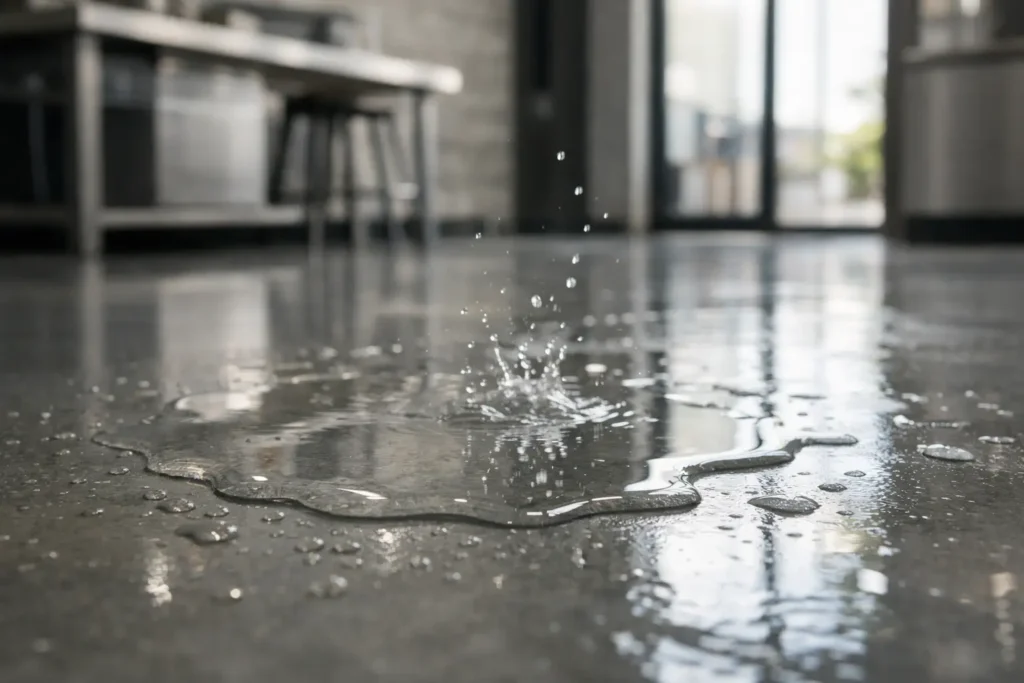
A wet footprint across a newly finished bathroom floor should be a non-event, not a reason to reach for a towel. So, are resin floors waterproof? When the correct resin system is professionally specified and installed, the floor surface itself forms a highly water-resistant, non-porous barrier. In practical terms, that means everyday splashes, spills and cleaning water stay on the surface rather than soaking into the floor.
But a beautiful resin floor is not made waterproof by resin alone. The substrate beneath it, the perimeter detailing, drainage, joints and preparation all influence how well a finished space deals with moisture over time. That distinction matters most in bathrooms, kitchens, utility rooms, garages and commercial settings where water is part of daily life.
Are resin floors waterproof in real homes and businesses?
A cured resin coating creates a continuous finish with no grout lines for water and dirt to settle into. Unlike tiles, which rely on grout and multiple joints, resin can be applied as one flowing surface across a room. This makes it exceptionally easy to clean and particularly well suited to spaces where a calm, refined look must work hard behind the scenes.
Epoxy resin is widely valued for its chemical resistance, durability and ability to create decorative or heavy-duty surfaces. Polyurethane systems offer a little more flexibility and can be a strong choice where comfort underfoot, movement in the substrate or UV stability are relevant. The right material is selected around the room, how it will be used and the finish you want to achieve, rather than chosen on waterproofing claims alone.
For a kitchen, that may mean a decorative epoxy surface that handles dropped drinks, cooking splashes and regular mopping with ease. For a garage or warehouse, it may mean a more industrial coating designed to cope with vehicle traffic, oil, cleaning products and sustained wear. In each case, a properly installed resin finish prevents liquids from passing through its surface.
Waterproof surface versus a waterproof room
This is where expectations need to be precise. Resin flooring can be waterproof as a surface, but it does not automatically turn every room into a fully tanked wet area.
Water can still find weaknesses at the edge of a floor, around pipe penetrations, through poorly formed shower drains or beneath failed sealant. If a bathroom has persistent moisture issues in the subfloor, coating over them without resolving the cause is not a lasting solution. Resin is a finish with impressive performance, not a substitute for sound building work.
In wet rooms and shower spaces, the waterproofing strategy should begin below the visible surface. A suitable waterproof membrane or tanking system may be needed, particularly around shower zones, drains and wall-to-floor transitions. Resin is then applied over a stable, correctly prepared base, with careful detailing at every vulnerable point.
That level of workmanship is what allows a resin floor to feel effortlessly minimal while doing the serious practical work. The finished result should look considered, not technical, but the technical decisions are what protect the design.
Why preparation matters more than most people expect
Resin bonds to the substrate beneath it. If that base is weak, contaminated, damp or moving, the floor can be compromised regardless of how premium the top finish appears. Moisture testing is therefore essential before installation, especially on ground-floor concrete slabs and new screeds.
A professional installer will assess whether the subfloor has an acceptable moisture level, whether cracks require repair and whether a moisture-suppressing primer is necessary. Existing tiles, concrete and timber-based floors each call for a different approach. Skipping this stage can lead to poor adhesion, bubbling or delamination, all of which create routes for water to reach the substrate.
The floor also needs correctly planned falls where water is intended to run towards a drain. Resin can follow and refine a prepared fall, but it will not magically correct an unsuitable one. This is particularly relevant in wet rooms, commercial kitchens and washdown areas.
Where resin flooring performs especially well
Resin is an appealing choice where cleanability and design freedom need to sit together. In domestic bathrooms, it creates a tranquil, joint-free visual field that can continue from floor to wall for a more architectural effect. Soft concrete tones, terrazzo-inspired blends and subtle mineral movement can make compact rooms feel more generous without compromising practicality.
Kitchens and utility rooms also benefit from a surface that does not absorb routine spills. There are no grout lines to discolour around cabinets or collect residue near busy work zones. A suitable satin or matt texture can provide a composed, contemporary appearance while remaining easy to maintain.
For garages, workshops and commercial premises, resin offers another kind of reassurance. Heavy-duty systems can resist water, oil, tyre marks and many common chemicals, depending on the specification. The finish can be tailored with slip-resistant aggregates where traction matters, giving the floor a more secure footing in wet or demanding areas.
Retail interiors and hospitality spaces can use resin to make an impression without sacrificing durability. A decorative metallic finish or bespoke terrazzo-style surface can carry a brand atmosphere across a large floor area, while the non-porous finish makes day-to-day cleaning simpler.
The trade-offs to consider before choosing resin
No floor finish is entirely maintenance-free, and waterproof does not mean indestructible. Resin surfaces should be protected from sharp impacts, excessive abrasion and cleaning products that are not suited to the specific system. High heels, dragged furniture and heavily soiled entrance areas can all affect the appearance of a decorative finish over time.
Slip resistance is another point to discuss early. A very smooth, glossy floor may look striking, but may not be the best choice for a shower room, poolside setting or commercial entrance exposed to rain. Texture can be incorporated into the resin system, although more texture can make cleaning slightly more involved. The best specification balances visual intent, safety and the realities of the space.
Direct sunlight also deserves consideration. Some epoxy systems can change colour when exposed to strong UV light, so a UV-stable topcoat or alternative resin system may be appropriate near large glazed doors, conservatories or bright south-facing rooms. A skilled specification protects both the floor’s performance and its chosen colour.
Caring for a water-resistant resin finish
Routine care is refreshingly straightforward. Sweep or vacuum grit regularly, then clean with a soft mop and a pH-neutral cleaner recommended for the installed system. Wipe up spills promptly, especially oils, dyes and strong chemicals, even when the floor has good resistance to them.
Avoid abrasive pads, harsh bleach-based products unless approved, and steam cleaning without checking the manufacturer’s guidance. Place protective pads beneath furniture and use entrance mats in busy areas to reduce the grit that can gradually dull any floor surface. With sensible care, resin retains its depth, clarity and finish for years.
Choosing the right system for a wet area
The best question is not simply whether a resin floor is waterproof. It is whether the complete floor build-up is right for your room. A bathroom with a walk-in shower, for example, needs a different level of waterproof detailing from a downstairs cloakroom. A family kitchen needs a different balance of texture and stain resistance from a showroom or vehicle workshop.
During a proper consultation, consider how often the room gets wet, whether water will be directed to a drain, what lies beneath the existing floor and the visual finish you are trying to create. Samples are valuable here. They allow you to see how a colour, aggregate or metallic movement sits in natural and artificial light, while also discussing the practical finish beneath your feet.
For projects across Essex and London, Resinize approaches resin as both a protective surface and an opportunity to craft a distinctive interior. The strongest results come from treating waterproofing, preparation and artistry as one considered process.
A well-specified resin floor gives water very little opportunity to interrupt the life of a room. Give equal attention to the substrate and details around it, and the finish can remain as dependable as it is visually memorable.