
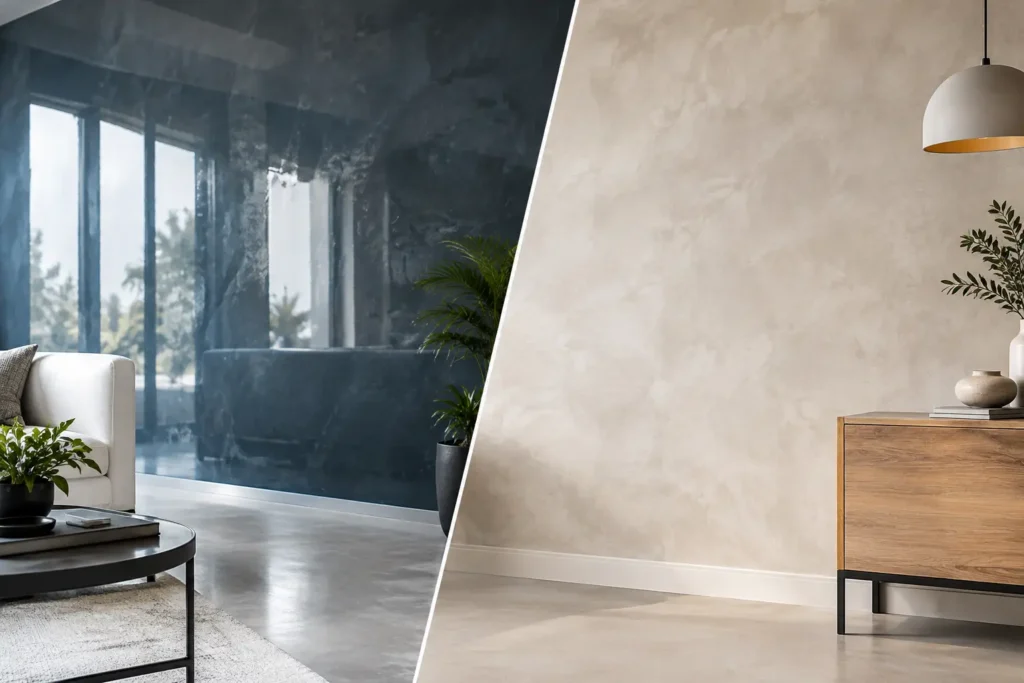
A wall finish is rarely a background decision. It changes how light settles in a hallway, whether a shower room feels calm or clinical, and how a retail interior carries its identity. When weighing resin walls versus polished plaster, the better choice is not simply the finish that looks strongest on a sample board. It is the one whose character, maintenance needs and performance suit the room long after the project photographs are taken.
Both finishes bring depth, tactility and a considered alternative to standard paint or tile. Yet they achieve their effect in very different ways. Polished plaster has a hand-worked, mineral quality, while resin can create an uninterrupted, contemporary surface with remarkable scope for colour, movement and sheen.
Resin walls versus polished plaster: the real distinction
Polished plaster is an umbrella term for decorative plaster finishes applied in thin layers and burnished to create depth, variation and subtle lustre. Venetian-style finishes often use lime-based materials, although modern systems vary. Their appeal lies in their natural irregularity: the fine shifts in tone, soft marks from the trowel and changing response to daylight make every wall feel individual.
Resin wall finishes are created by applying specialist resin-based coatings over a carefully prepared substrate. Depending on the chosen system, they can appear softly clouded, richly metallic, stone-like, concrete-inspired or almost glass-smooth. Pigments, decorative effects and application techniques allow the finish to be crafted around the wider scheme rather than selected from a limited range of colours.
The central difference is not that one is artistic and the other practical. Both can be highly expressive. It is that polished plaster celebrates the hand of the applicator and a mineral patina, whereas resin offers a more fluid, continuous and design-led surface with performance that can be tailored to demanding spaces.
Choose the visual language of the room
A polished plaster wall can make a period property feel quietly renewed or lend a contemporary home a sense of warmth that plain painted walls may lack. Its beauty is usually restrained. Even when it has a pronounced sheen, it tends to feel layered rather than glossy, with the gentle tonal variation associated with natural stone, aged limewash or polished concrete.
Resin has a wider visual range. A soft concrete-effect resin can sit confidently beside timber, black metal and warm lighting in a modern kitchen. A metallic finish can turn a reception wall, restaurant interior or garden room into a focal point, with movement that shifts as people pass. Terrazzo-inspired details and custom pigments can also connect a wall finish to flooring, joinery or brand colours without creating a busy scheme.
This makes resin especially compelling where the wall is intended to be part of the architecture rather than merely a backdrop. For a feature wall behind a bed, a dramatic stairwell or a boutique retail setting, the opportunity to control colour, depth and reflectivity is significant.
That said, a highly decorative resin effect needs confidence. In a small room with patterned tiles, strong timber grain and busy furnishings, a quieter plaster finish may offer balance. The most successful choice considers the whole composition: natural light, artificial lighting, adjacent finishes and how the space will be used.
Light changes everything
Neither finish should be chosen from a photograph alone. Polished plaster can appear warmer, cooler or more textured as daylight moves across it. Resin can amplify light beautifully, particularly with pearlescent or metallic effects, but a high-shine finish will also show reflections more clearly.
Samples should be viewed in the actual room at different times of day. This is where bespoke surface design earns its place: a finish can be adjusted for the atmosphere you want to create, rather than forced to fit after the design decisions have already been made.
Performance in kitchens, bathrooms and busy interiors
For wet areas and hardworking spaces, resin often has the practical advantage. A correctly specified and professionally installed resin wall system can create a continuous, low-joint surface that is easy to wipe down and does not rely on grout lines. This makes it particularly well suited to shower surrounds, bathroom walls, utility areas, hospitality settings and commercial interiors where hygiene and efficient cleaning matter.
The word correctly is essential. Water resistance depends on the complete system, including substrate preparation, primers, reinforcement where required, seals and detailing at corners, penetrations and junctions. A beautiful resin finish is only as dependable as the surface beneath it and the workmanship around it.
Polished plaster can also be used in bathrooms and kitchens, but the specification needs more care. Some finishes require protective waxes or sealers, particularly near splash zones. Maintenance products and cleaning methods must suit the material, and repeated exposure to harsh chemicals or standing water can compromise the appearance or protection over time. It can be an excellent choice for bathroom walls outside the direct shower area, but it is not automatically the right answer for every wet surface.
In family homes, resin’s easy-clean quality is attractive for hallways, kitchen-diners and spaces where fingerprints, splashes and everyday life are expected. In commercial settings, its continuous finish can support a polished visual identity without sacrificing practical durability.
Installation quality shapes the final result
Both resin and polished plaster are skilled finishes. Neither should be treated as a quick decorative coating. Surface preparation is fundamental, especially on walls with movement, existing cracks, uneven plaster or moisture concerns. The substrate may need repairing, levelling or reinforcing before the final finish is applied.
Polished plaster is built in multiple fine layers, with each pass contributing to depth and movement. Resin systems also involve carefully timed layers, controlled application and curing. The finish may look effortless when complete, but it is the result of methodical preparation and precise craftsmanship.
Resin has an advantage where continuity matters. It can be carried across broad wall areas and around architectural details with fewer visual interruptions than tiled surfaces. However, it is not immune to substrate movement. Buildings move, and joints or transition points must be assessed rather than simply coated over.
Repairs deserve honest consideration too. Minor damage to either finish can often be addressed, but invisible repairs are not always guaranteed because handmade surfaces have natural variation. With polished plaster, matching the existing movement and burnish takes skill. With resin, the effect, sheen and age of the coating can affect how discreetly a local repair blends. Choosing an experienced installer at the outset is the best protection against unnecessary remedial work later.
Cost is about scope, not just square metres
It is tempting to compare resin and polished plaster by a simple price per square metre. That rarely tells the full story. Wall condition, access, detailing, the number of colours or effects, waterproofing requirements and the size of the area all influence the final investment.
A small but intricate shower room can require more preparation and detailing than a larger, straightforward feature wall. Equally, a bespoke metallic resin finish involves a different level of artistry from a simple single-colour coating. Polished plaster costs can vary according to the number of layers, the desired sheen and the protection required for the location.
The more useful question is what the finish replaces. If resin removes the need for tiles, grout maintenance and several separate decorative materials, its value can extend beyond its initial cost. If a room needs a soft, mineral finish rather than high-performance wall protection, polished plaster may be the more appropriate investment.
Which finish belongs in your space?
Choose polished plaster when you want understated depth, a soft mineral character and a finish that feels rooted in traditional decorative craft. It works beautifully in living rooms, bedrooms, hallways, dining spaces and lower-exposure bathroom areas where atmosphere is the main priority.
Choose resin when you want a more continuous surface, custom colour or decorative impact, and a finish that can be specified for demanding environments. It is particularly effective for shower walls, kitchens, statement interiors, retail settings and commercial spaces that need design presence alongside everyday practicality.
There is also room for both in one project. A polished plaster wall may bring warmth to a lounge, while a resin finish provides practical elegance in the adjoining kitchen or bathroom. The finishes do not need to compete when they are chosen with a clear design hierarchy.
The strongest interiors begin with how a space needs to feel and function, then allow the surface to answer that brief. A considered sample, an honest assessment of the wall condition and expert installation will take you much further than following the latest finish trend.