
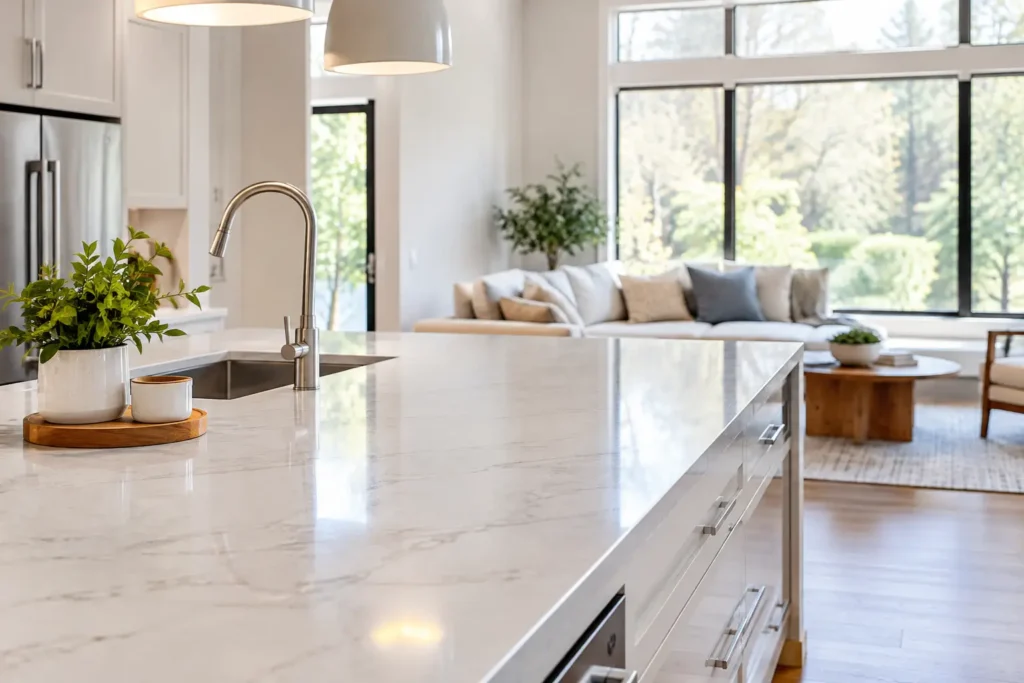
A floor can be technically durable and still leave a room feeling interrupted. Grout lines, thresholds and repeated joints divide the eye, collect dirt and often dictate the look of an interior more than the furniture does. Seamless surfaces take a different approach: a continuous, hand-finished plane that lets colour, texture and light carry the design.
For homeowners, that can mean a calm kitchen floor flowing into a dining area, or a bathroom with the quiet polish of a boutique hotel. For commercial spaces, it can mean a finish that works hard under footfall while presenting a more considered face to customers, visitors and staff. The appeal is visual, but the value lies in the balance between artistry, preparation and everyday performance.
Why seamless surfaces alter the feel of a room
A continuous finish makes a space read as one considered composition. Without tile joints breaking up the floor, rooms often feel broader and more open, particularly in hallways, compact kitchens and converted spaces where every visual interruption counts. The effect is not limited to minimal interiors, either. A warm concrete-effect floor can ground timber cabinetry; terrazzo-inspired detail can bring character to a restrained scheme; metallic resin can turn a feature wall or reception area into something genuinely individual.
The absence of grout also changes the practical experience. There are fewer grooves for dust, spills and moisture to settle into, making routine cleaning more straightforward. In busy family homes, retail units and hospitality settings, that reduction in awkward cleaning points is a real advantage.
That said, continuity should never be confused with a single, flat look. Resin can be created with movement, depth, aggregate, tonal variation or a soft matt texture. The strongest projects use that freedom with restraint. A finish should support the architecture and the way the room is used, rather than compete with everything placed within it.
Choosing the right seamless surface finish
There is no universal resin finish. The right choice depends on the existing substrate, the level of traffic, exposure to water, the desired appearance and how much individuality the scheme calls for. A sample is invaluable because a finish can change character under natural daylight, warm kitchen lighting or the cooler illumination of a commercial unit.
Terrazzo-inspired resin overlays
Terrazzo-inspired overlays bring visual detail without the joints associated with tiled alternatives. Decorative chips or aggregates can be selected to complement cabinetry, paintwork or a wider material palette, then set within a durable resin system. They suit kitchens, hallways, retail spaces and social areas where the floor needs to feel expressive but refined.
The design opportunity is substantial, from soft neutral blends to bolder combinations with a more architectural presence. However, a heavily patterned floor can dominate a small room. In compact interiors, a quieter blend often delivers the more enduring result.
Decorative epoxy and metallic finishes
Decorative epoxy offers depth, tonal movement and a crafted quality that cannot be replicated by a printed product. Metallic effects can be dramatic, with fluid variations that make each installation distinct. They work particularly well in feature spaces, bars, salons, showrooms and statement bathrooms where the surface is intended to be noticed.
Because these finishes have visual energy, scale matters. A metallic floor across a large open-plan home may need a subtle palette and controlled movement, while a reception area can accommodate a stronger effect. The aim is considered impact, not novelty.
Concrete-effect resin
Concrete-effect finishes offer the calm, contemporary appearance many clients want without the dusting, cracking risk and maintenance concerns sometimes associated with raw concrete. Colour can range from pale limestone tones to charcoal and warmer mineral greys, with the finish tailored to suit the room.
This style is especially effective where an interior needs a clean architectural base. It pairs naturally with timber, brushed metal, soft textiles and painted joinery. It is also versatile enough for kitchens, living spaces, studios and commercial interiors that need understated durability.
Heavy-duty commercial coatings
In warehouses, garages, workshops and back-of-house areas, the brief shifts. Resistance to abrasion, impacts, oils, wheeled traffic and frequent cleaning takes priority, but appearance still matters. A professionally specified coating can create a brighter, cleaner working environment and reinforce the standard of the operation taking place within it.
The key is matching the system to the environment. A domestic decorative coating is not automatically suitable for a busy garage, just as an industrial specification may be unnecessary in a quiet spare room. Honest assessment at the outset protects both the finish and the investment.
The detail beneath the design
The visible surface is only as good as the preparation below it. Resin systems are applied over a sound, properly assessed substrate, and the condition of that base affects adhesion, appearance and longevity. Cracks, moisture, contamination and uneven areas must be understood before installation begins.
This is where craftsmanship becomes practical rather than ornamental. Preparation may involve mechanical grinding, local repairs, levelling work or a moisture-control primer, depending on the site. Rushing this stage can lead to imperfections, movement-related cracking or failure of the bond. A beautiful sample cannot compensate for an unsuitable base.
Edge details deserve equal attention. How the floor meets skirting, doorways, cabinetry, drainage points or adjacent materials has a major influence on the finished result. In bathrooms and wet areas, falls, waterproofing arrangements and junctions need to be planned carefully. Resin can provide a highly water-resistant finish, but the complete build-up must be designed for the specific setting.
For projects across Essex and London, older properties can present additional variables, from uneven slabs to historic alterations. A site survey is not a formality in these spaces. It is the point at which design ambition meets the realities of the building.
Living with a continuous resin finish
One reason resin appeals to design-conscious clients is that it does not demand complicated upkeep. Most floors need regular sweeping or vacuuming with a soft attachment, followed by cleaning with a suitable pH-neutral product. Harsh chemicals, abrasive pads and steam cleaning should be avoided unless the installed system has been confirmed as compatible.
Furniture should have protective pads, and heavy items should be moved with care rather than dragged. In entrance areas, good-quality mats help reduce grit, particularly during wet British weather. These are small habits, but they preserve the surface sheen and protect against unnecessary scratching.
The finish level should be selected with real life in mind. High gloss can look striking and amplify light, yet it may show dust, marks and minor scratches more readily. A satin or matt finish can feel softer and more forgiving in a family kitchen or high-footfall commercial space. There is no inferior choice here, only a choice that should suit the room and its users.
Designing for longevity, not a passing trend
The most successful resin interiors are not built around a social-media moment. They are shaped around proportion, light, material balance and the daily rhythm of the space. A pale, lightly textured floor may create the flexibility to change furnishings over time. A bolder decorative treatment may be exactly right where a business wants the premises to express its identity from the first step inside.
At Resinize, the process begins with the question behind the finish: how should this room feel, and what does it need to withstand? That conversation guides colour, texture, system selection and detailing, resulting in a surface that is personal without being impractical.
If you are considering a continuous floor or wall finish, start with the room rather than a trend image. Notice its light, its traffic, its existing materials and the moments where a more considered surface could change the whole atmosphere. The best result is not simply one that looks impressive on installation day, but one that continues to feel right every time the room is used.