
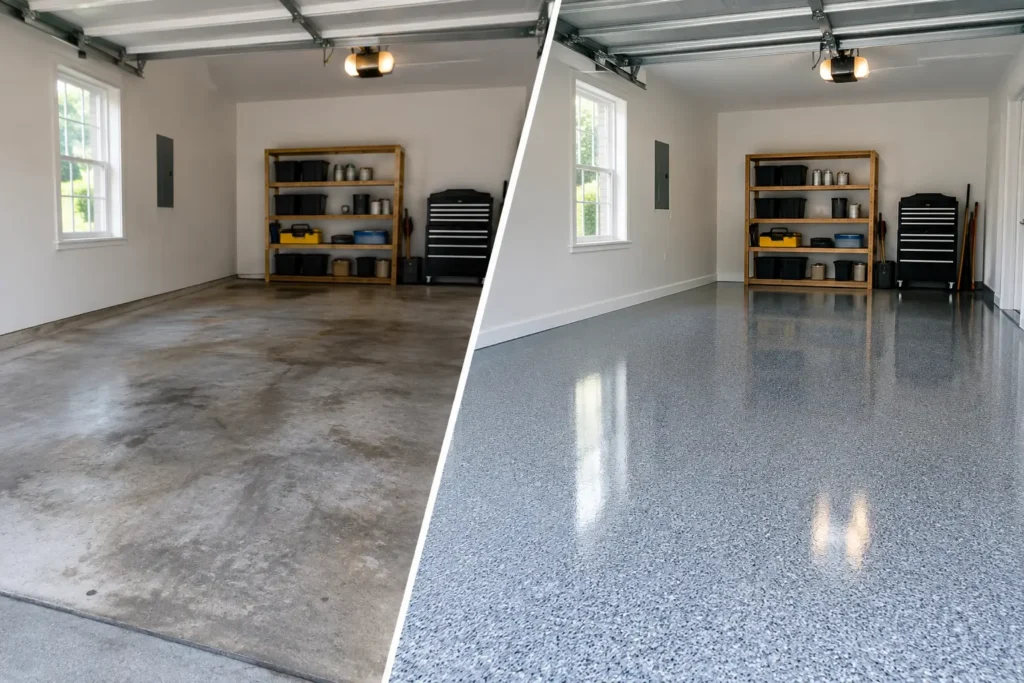
A convincing garage resin floor before after transformation is rarely just about adding a glossy finish. The real change begins with the concrete beneath it: dusty, stained or cracked slabs are prepared, repaired and reimagined as a clean, continuous surface with purpose. Whether the garage houses a cherished car, functions as a workshop or forms part of a considered home renovation, resin can turn a purely practical room into a space worth opening the door to.
The most successful projects balance visual impact with the realities of daily use. Tyres, tools, dropped items, oil marks, damp conditions and regular foot traffic all shape the right specification. The result should feel considered, not merely coated.
What changes in a garage resin floor before after project?
Before installation, many garages have the same familiar qualities: porous concrete, tyre shadows, ingrained oil, flaking paint and patches where previous repairs have failed. Even a structurally sound slab can make the entire space feel unfinished. Bare concrete also holds dust, which travels into vehicles and adjoining rooms.
After a professionally installed resin floor, that visual noise is replaced by one seamless plane. Joints and uneven colouring recede, light reflects more evenly around the room, and the garage gains the appearance of an intentional part of the property rather than a forgotten utility zone.
There is a practical shift as well. A correctly specified resin system creates a non-porous, easy-clean finish that is far less likely to absorb routine spills. Instead of fighting stains with repeated scrubbing, most day-to-day marks can be dealt with quickly using a suitable cleaner and soft equipment. This matters particularly in garages used for vehicle maintenance, hobbies or storage.
The difference is not always a mirror-like shine. High-gloss resin can look striking, especially in a design-led garage, but satin and matt options may better suit a softer architectural scheme or reduce the visibility of dust and tyre marks. The finish should support how the space is used, not compete with it.
The before stage: why preparation decides the outcome
Resin is only as dependable as the substrate it is bonded to. That is why the most important work often happens before the decorative layer is applied. A garage floor must be assessed for moisture, contamination, movement and the condition of any existing coating. Simply applying resin over weak paint, damp concrete or oily patches can lead to poor adhesion and premature failure.
Mechanical preparation is normally required to create a clean, sound surface with the right profile for bonding. Depending on the slab, this may involve diamond grinding or more intensive treatment. Cracks, holes and damaged edges are then repaired with compatible materials, while expansion joints need careful consideration rather than being casually covered.
This stage can look disruptive, but it is where lasting quality is built. A floor with old oil staining may require specialist degreasing and extra preparation. A new garage slab may look ready, yet still need to reach an appropriate moisture condition before coating. If the building has recurring damp or water ingress, that issue should be addressed first. Resin is a high-performance finish, not a cure for an unresolved substrate problem.
For homes across Essex and London, it is also worth considering how the garage relates to the rest of the property. A garage that opens directly into a hallway, utility room or converted living space benefits from a finish that feels visually connected, while still being tough enough for its working role.
Choosing the look: utility can still have character
The after image people imagine is often a sleek grey floor with a crisp white wall line. It remains a strong choice because it makes vehicles, cabinetry and equipment stand out. Yet garage resin flooring offers more design freedom than a single industrial grey.
A solid-colour epoxy or polyurethane system can deliver a controlled, contemporary finish in graphite, mid-grey, black, warm stone or a bespoke shade that works with the wider interior palette. Decorative flake systems introduce texture and visual depth, helping to disguise minor dust and everyday debris without losing the refined, seamless feel. For a more expressive space, metallic effects can create movement and dimension, particularly in a showroom-style garage, a car collection space or a multifunctional garden room.
Colour choice has a practical side. Very dark floors can show pale dust, while bright white can reveal tyre transfer and workshop marks sooner. Mid-tones and decorative blends are often the most forgiving for active garages. If the room has limited natural light, a lighter base can make a notable difference to how open it feels.
The visual decision should also include the perimeter. Freshly finished skirting details, walls, storage units and lighting can strengthen the before-and-after effect, but the floor remains the foundation. Its uninterrupted surface creates the sense of order that makes every other improvement look sharper.
Performance under tyres, tools and everyday traffic
A garage floor needs a coating system matched to its job. A domestic garage used mainly for parking and storage has different demands from a workshop, detailing bay or commercial unit with heavier vehicle movement. The right resin build-up, topcoat and texture should be selected accordingly.
Chemical resistance is a clear benefit when dealing with occasional oil, fuel or cleaning-product spills, but it does not mean every substance should be left sitting indefinitely. Prompt cleaning remains good practice. Likewise, heavy point loads, metal stands and dropped tools can damage almost any decorative surface if used carelessly. Resin offers significant durability, not invincibility.
Slip resistance deserves equal attention. A fully smooth, polished-looking floor may suit a low-traffic display garage, whereas a working area, entrance route or space exposed to wet footwear may call for a more textured finish. Added texture can make cleaning slightly more involved and may alter the visual smoothness, so it is a considered trade-off rather than an automatic upgrade.
Tyre pick-up is another common concern. High-quality preparation and a properly cured, professionally specified system reduce the risk, but hot tyres and aggressive turning can place added stress on any floor coating. Allowing the floor to cure fully before use is essential. The temptation to move vehicles back in early can compromise work that has taken careful preparation to complete.
The installation journey from concrete to finished surface
Every project differs, but the sequence is deliberate. After survey and specification, the garage is cleared and the concrete is mechanically prepared. Repairs and local levelling are completed before the primer, resin layers, decorative elements where selected, and protective topcoat are applied.
The time on site depends on the condition of the slab, the chosen system, the garage size and curing conditions. A simple coating installation may move more quickly than a build-up requiring extensive repairs, moisture management or detailed decorative work. Temperature and humidity can also affect application windows and cure times, which is why a rushed timetable is not always a realistic one.
During installation, the room can look temporarily less impressive than it did at the start. Grinding equipment, repair patches and base layers are all part of the process. The transformation becomes apparent once the final surface has levelled and cured: the floor reads as one considered finish rather than a collection of concrete imperfections.
Keeping the after image looking good
One of resin’s strongest qualities is that maintenance is straightforward. Regular sweeping or vacuuming removes abrasive grit, while a damp mop and appropriate pH-neutral cleaner will deal with ordinary marks. Avoid harsh products or abrasive pads unless they have been recommended for the specific finish.
Place protective pads beneath very heavy fixed equipment and deal with spills promptly. If the garage sees wet vehicles in winter, periodic cleaning stops road grime and salt residues from building up. These simple habits preserve both the appearance and the long-term performance of the surface.
A well-crafted resin garage floor does more than conceal concrete. It changes the way the room is used and perceived: cleaner, brighter, more organised and unmistakably part of the home or business it serves. The most compelling before-and-after result comes from choosing a finish that has been designed around the space, then giving the preparation and craftsmanship behind it the attention they deserve.