
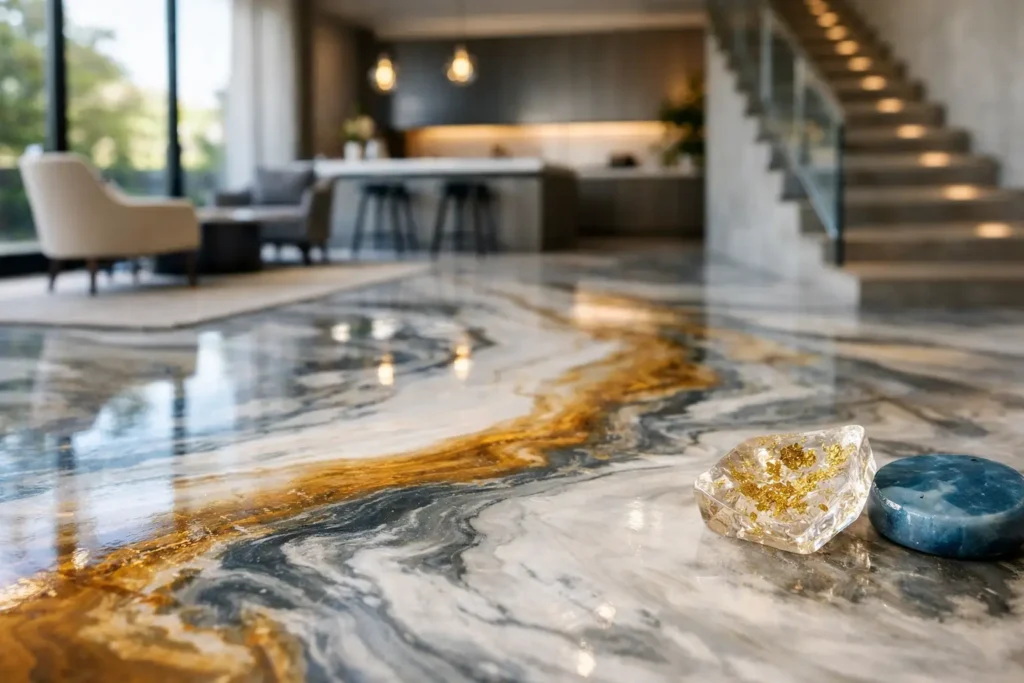
A floor can quietly support a room, or it can define it. That is the real appeal of bespoke resin floor design. It gives homeowners and commercial clients the chance to treat the floor not as a background surface, but as part of the architecture itself – considered, expressive and built to perform.
That matters more than people often expect. In a kitchen extension, retail unit, showroom or entrance hall, the floor occupies more visual space than almost any other finish. If it feels flat, cheap or disconnected from the rest of the scheme, the whole room can lose clarity. When it is designed properly, resin has the opposite effect. It sharpens the aesthetic, adds depth and creates a sense of intention that standard flooring rarely achieves.
Why bespoke resin floor design feels different
The difference starts with freedom. Tiles, timber and sheet materials come with fixed dimensions, repeated patterns and limitations in layout. Resin opens up a broader design language. You can create a soft concrete effect, a terrazzo-inspired surface, a high-gloss decorative finish, metallic movement or a restrained matt look with subtle tonal variation. The result can be dramatic, but it can also be quiet and architectural.
That range is exactly why bespoke resin floor design suits so many different settings. In residential spaces, it can bring calm, continuity and a more contemporary feel from room to room. In commercial interiors, it can reinforce brand identity, improve durability and give practical areas a more refined appearance. A warehouse, garage or salon does not need to look purely functional. It can still feel polished and deliberate.
What makes resin especially compelling is that design and performance are not separate decisions. The finish is not simply applied for looks and then tolerated in daily use. A well-specified resin floor is hard-wearing, easy to maintain and comfortable within the demands of the space. That balance is where real value sits.
The design choices that shape the final result
A bespoke floor is not just about picking a colour. The visual effect comes from several decisions working together, and small adjustments can change the mood of a room quite significantly.
Colour, tone and atmosphere
Pale resin floors can make a space feel larger, cleaner and more open, which works particularly well in kitchens, hallways and modern rear extensions. Darker tones add contrast and drama, but they need enough natural or layered lighting to avoid making a room feel heavy. Mid-tones often offer the most flexibility because they ground the scheme without dominating it.
The most successful choices are usually tied to the wider interior palette. Warm greys, chalky neutrals and earthy mineral shades tend to sit comfortably with timber, stone, black accents and brushed metal finishes. That said, there is room for bolder design where the brief calls for it. Feature spaces, retail environments and statement bathrooms can carry stronger tones with real confidence.
Texture and finish level
Gloss, satin and matt finishes all tell a different story. Gloss can create a striking, reflective effect and amplify light beautifully, but it is not right for every project. In some homes it can feel too polished, and in busy commercial settings it may show marks more readily. Satin often strikes the best balance, offering a refined finish without excessive shine. Matt surfaces feel understated and contemporary, especially in concrete-effect schemes.
Texture matters too. A completely smooth look suits many interiors, but slip resistance may be needed in kitchens, bathrooms, garages or commercial workspaces. This is one of those areas where design decisions should never be made in isolation. The floor needs to suit the way the room is actually used.
Pattern, movement and aggregate
Some clients want restraint. Others want character. Resin can accommodate both. A terrazzo-inspired finish introduces detail and rhythm through decorative aggregate, while metallic effects create movement and variation that feel more artistic and expressive. Concrete-style resin overlays tend to sit somewhere in between, giving a softer industrial character without the weight, joints or unpredictability of poured concrete.
There is a trade-off here. More visual movement can be stunning, but it also becomes a stronger part of the room’s identity. If the wider interior scheme is already busy, a quieter floor may give better balance. If the room is minimal and well edited, a more expressive finish can become the focal point.
Where bespoke resin works best
One of resin’s strengths is its versatility, but that does not mean every finish suits every environment in the same way.
In residential interiors, open-plan kitchens, dining spaces and hallways are particularly strong candidates because resin creates visual continuity. Without grout lines or board joints interrupting the surface, the room feels calmer and more cohesive. Bathrooms can also benefit, especially where a clean, contemporary look is wanted and ease of maintenance is part of the brief.
For garages, utility spaces and workshops, the appeal is more than aesthetic. A properly installed system can cope with demanding use while still looking sharp. That matters for clients who want these areas to feel like part of a considered property rather than leftover service zones.
In commercial settings, bespoke resin floor design is often at its best when a business wants practicality without a generic finish. Retail units, studios, salons and hospitality spaces all benefit from flooring that can withstand traffic while supporting the atmosphere of the brand. In more industrial spaces, performance understandably leads the brief, but that still leaves room for a cleaner, more professional visual standard.
The role of specification and installation
Good resin flooring does not begin on installation day. It begins with assessing the substrate, understanding how the space will be used and selecting the right system for the project. This is where many assumptions fall apart.
For example, a decorative epoxy finish in a domestic interior may not be the same specification you would choose for a warehouse or heavy-use garage. Moisture levels, movement in the subfloor, traffic load, cleaning regimes and slip requirements all influence what will work well over time. If those details are ignored in favour of appearance alone, even a beautiful finish can become a compromised one.
Preparation is equally important. Surface condition, levelling and adhesion all affect the final result. Resin is honest in that sense. It rewards precision and exposes shortcuts. For clients investing in a bespoke finish, craftsmanship matters because the quality is visible not just in how the floor looks on day one, but in how it ages.
This is often where specialist guidance makes the biggest difference. A sample may show colour and texture, but a proper consultation helps translate that into a finish that suits the room, the light, the usage and the client’s expectations.
Bespoke resin floor design and long-term value
The real question is not whether resin looks good when newly installed. It is whether it continues to justify the investment. In the right setting, it often does.
Part of that value comes from durability. Part comes from ease of cleaning. But there is also a less measurable return, which is the way a well-designed floor improves the feel of a space every single day. It can make a kitchen feel more resolved, a showroom more premium, a garage more intentional or a retail setting more aligned with the business it represents.
That said, bespoke design is not about choosing the most eye-catching finish available. It is about choosing the right finish for the space. Sometimes that means a bold statement. Sometimes it means a restrained surface with just enough depth and texture to elevate the whole room without demanding attention.
For clients across Essex and London, that is often the point at which resin becomes more than a flooring option. It becomes part of the interior concept.
A thoughtfully designed resin floor should feel as though it belongs to the space from the start – not added on at the end, but crafted into the way the room lives, works and leaves its impression.