
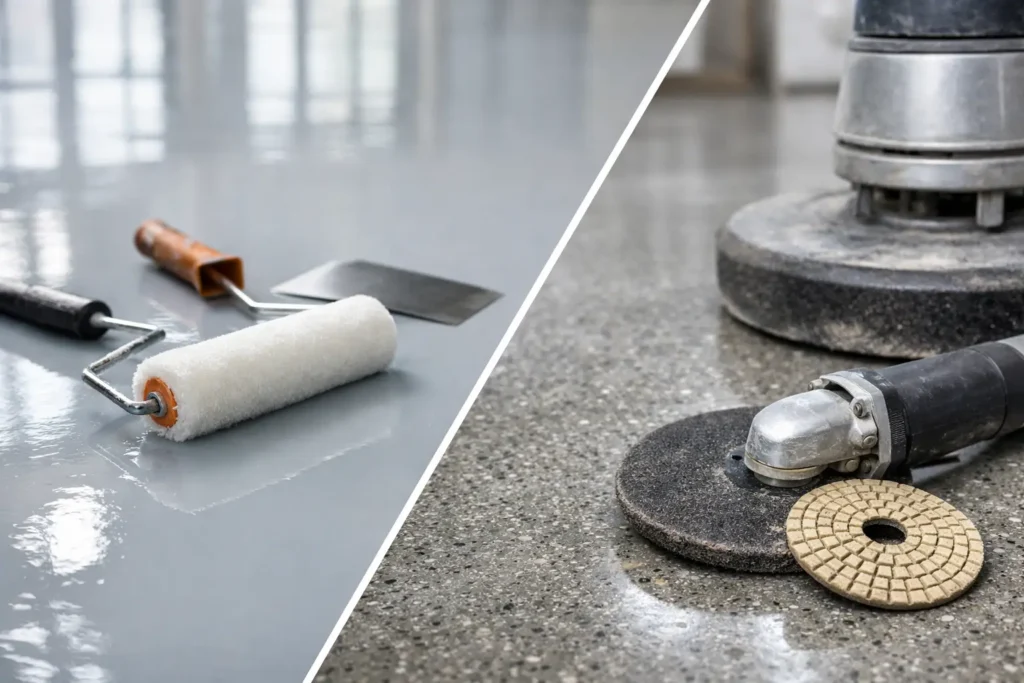
Choosing a floor finish often comes down to a single question: resin flooring vs polished concrete. Both create a clean, contemporary look. Both are durable. Yet they behave very differently once they are part of a real space, with real footfall, changing light, spills, furniture and everyday wear.
For homeowners and commercial clients alike, this is less about picking the harder material and more about choosing the right atmosphere, performance and level of design freedom. A floor is one of the largest visual surfaces in any interior. It shapes how a room feels before anyone notices the furniture.
Resin flooring vs polished concrete: what sets them apart?
At first glance, the two can appear similar. Each can deliver a modern, minimal finish with a refined surface and architectural presence. The difference is in how they are made and what that allows them to do.
Polished concrete is usually an existing or newly poured concrete slab that has been ground, densified and polished to achieve a smooth finish. Its appeal comes from honesty of material. You see the character of the slab itself, with natural variation, subtle movement and occasional imperfections that are part of the look.
Resin flooring is a surface system applied over a prepared substrate. Depending on the specification, it can be sleek and understated, richly decorative, terrazzo-inspired, metallic, concrete-effect or entirely bespoke in tone and texture. That flexibility is a major distinction. Where polished concrete reveals what is already there, resin is crafted to create a finish with far more control.
The design question comes first
If aesthetics matter as much as performance, resin usually gives you more room to shape the outcome. Colour can be matched more precisely. The sheen level can be adjusted. The final appearance can feel soft and calm, bold and dramatic, or quietly luxurious.
Polished concrete has a more fixed visual language. Its beauty lies in restraint. You work with the slab, not against it. Some clients love that raw architectural quality. Others find it limiting, especially when they want a warmer palette, a more refined decorative finish or a surface that feels tailored to the wider interior scheme.
This is often the turning point in the resin flooring vs polished concrete decision. If you want the floor to play a stronger design role, resin tends to offer a more considered and customisable result. If you want an industrial-modern surface with natural inconsistency, polished concrete can be exactly right.
Texture, sheen and visual warmth
Polished concrete reflects light beautifully, but it can also feel visually cool. In north-facing rooms or large commercial spaces, that can read as elegant and crisp, or slightly stark, depending on the rest of the design.
Resin has more range. A satin or matt resin can soften a room. A gloss finish can create depth and drama. Decorative systems can introduce movement and texture without breaking the seamless look. For kitchens, bathrooms, retail interiors and feature spaces, that extra design control is often what elevates the result from functional to memorable.
Performance in daily life
Both surfaces are known for durability, but durability is not a single quality. It includes stain resistance, impact resistance, ease of cleaning, slip considerations and how the floor responds to its environment.
Polished concrete is hard-wearing, but it is also porous unless properly treated and maintained. It can be vulnerable to staining from oils, acids and spills if protection is insufficient or starts to wear back. Hairline cracking is also part of the reality of concrete. Some clients accept that as character. Others see it as a drawback, particularly in polished domestic interiors where a cleaner finish is expected.
Resin flooring performs differently. A correctly specified resin system creates a sealed, non-porous surface that is highly resistant to spills and straightforward to maintain. In kitchens, bathrooms, garages and commercial units, that practical benefit matters. There are fewer places for dirt and moisture to settle, and no grout lines to interrupt the finish.
Comfort underfoot and acoustics
This part is often overlooked. Concrete can feel colder and harder underfoot, especially in residential settings. In open-plan homes, that may be balanced by underfloor heating or softened with furnishings, but it is still a consideration.
Resin is also a hard surface, yet it can feel slightly more forgiving depending on the system beneath and the final build-up. It also tends to produce a more refined acoustic experience than bare polished concrete, which can amplify sound in larger, sparsely furnished spaces.
Installation and substrate realities
The ideal floor on paper is not always the right floor for the building in front of you. Existing conditions matter.
Polished concrete depends heavily on the slab quality. If the concrete is uneven, poorly poured, heavily cracked or visually inconsistent, polishing may expose more problems than it solves. That can turn a supposedly simple finish into a compromised one.
Resin offers more adaptability because it is installed as a designed surface over a prepared base. That does not mean preparation is unimportant – it is critical – but it does mean there is greater scope to create a controlled final appearance even when the underlying substrate is less than perfect.
For renovation projects, especially in homes where the original floor has seen years of alteration, resin can be a more practical route to a premium finish. For new-builds with a beautifully cast slab and an intentionally industrial design language, polished concrete may make more sense.
Maintenance and long-term appearance
A beautiful floor only stays beautiful if it works with the pace of the space.
Polished concrete generally needs regular care to preserve its look. Dust, grit and acidic spills can dull or mark the surface over time. Protective treatments may need refreshing, particularly in busy commercial settings.
Resin is usually easier to keep looking sharp. Because it is seamless and sealed, routine cleaning is straightforward. That appeals to homeowners who want low-maintenance living as much as it does to commercial operators managing hygiene and presentation standards.
That said, no premium floor is immune to abuse. Resin can scratch if dragged furniture, machinery or grit are left unchecked. The advantage is that a well-chosen system can be specified for the intensity of use, from elegant domestic spaces to heavy-duty working environments.
Cost depends on what you are really buying
Price comparisons between resin flooring and polished concrete can be misleading because the specification drives the cost.
A basic polished concrete finish may appear cost-effective if there is already a suitable slab in place. But if the slab needs correction, repair or additional treatment, costs can rise quickly. The same is true when a higher-grade polish and more refined finish are required.
Resin can range from practical commercial coatings to highly decorative bespoke systems. If you are commissioning a statement surface with careful colour work, premium detailing and a flawless seamless finish, it is not a budget product. It is a design-led architectural finish.
The better question is not which is cheaper. It is which offers better value for the way the space needs to look and perform over time.
Which works best in different spaces?
In residential interiors, resin often has the edge where visual cohesion and comfort matter. Kitchens, hallways, bathrooms and open-plan living areas benefit from the seamless finish, the design freedom and the easier maintenance. If the aim is a contemporary interior that feels polished rather than stark, resin can bring more sophistication.
In commercial settings, the choice depends on use. Retail and customer-facing environments often benefit from resin because branding, colour and first impressions matter. Warehouses, garages and workspaces may suit either material, though resin is frequently preferred when chemical resistance, easy cleaning or a more controlled finish are priorities.
For design-conscious clients in Essex and London, this is often where the conversation becomes more nuanced. The strongest projects are not led by trend alone. They are shaped by how the floor will support the architecture, the lighting and the daily demands of the space.
Resin flooring vs polished concrete: which should you choose?
Choose polished concrete if you genuinely want the natural character of concrete, accept visual variation and are working with a slab that is good enough to become the finish itself. It suits minimalist, industrial and architect-led schemes where material honesty is the point.
Choose resin if you want more influence over the final aesthetic, a seamless and low-maintenance surface, and a finish that can be tailored to how the room should feel. It is especially strong where design precision matters just as much as durability.
That is why many clients who begin by asking for a concrete look eventually choose resin. They are not abandoning the architectural feel they admired. They are refining it into something more intentional.
The right floor should not simply cope with life. It should improve the way a space looks, feels and functions every single day.