
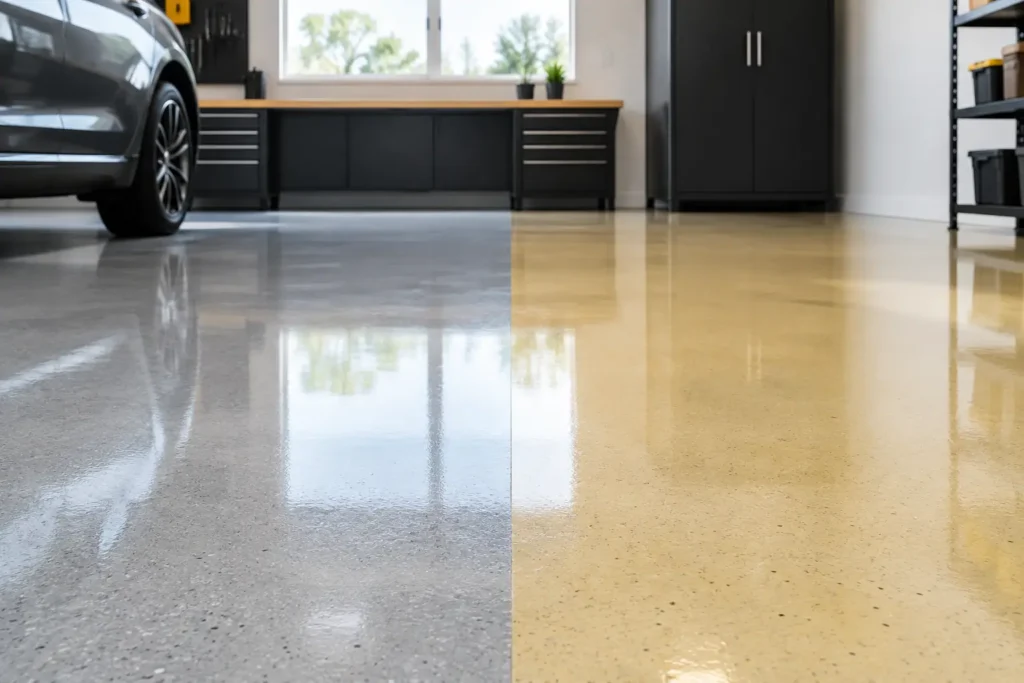
A bright white resin floor can look beautifully crisp on installation day, then become a source of frustration if its tone changes in the sunlight. So, do epoxy floors yellow? Some can, particularly when they are exposed to UV light. But yellowing is not an inevitable feature of every resin floor, nor does it mean epoxy is the wrong choice. It comes down to the resin chemistry, the protective topcoat, the room and the finish you have chosen.
For a surface designed to become part of an interior’s character, those details matter. The right system can preserve a clean, considered appearance while still delivering the seamless durability that makes resin such a compelling material.
Why do epoxy floors yellow?
Standard epoxy resin is highly valued for its strength, adhesion and ability to create a smooth, continuous finish. It is widely used in garages, workshops, kitchens, retail settings and design-led homes for good reason. However, many conventional epoxy formulations are not naturally UV-stable.
When ultraviolet light reaches an epoxy surface, it can alter the chemical structure of the resin. The result may be a gradual amber or yellow cast, most visible on white, cream, pale grey and clear finishes. In strong sunshine, such as beside south-facing glazing, bifold doors or a conservatory roof, that change can become apparent more quickly.
This is often a colour change at the surface rather than a loss of structural performance. A floor may remain hard-wearing and well bonded while its original shade becomes warmer. That distinction is useful, but for a carefully designed kitchen, hallway or reception space, appearance is not a minor consideration. It is the reason the floor was selected in the first place.
Not all yellowing has the same cause
UV exposure is the most familiar culprit, but it is not the only reason a pale resin floor can appear to change over time. Heat, ageing, cleaning residues and the existing condition of the substrate can all affect what the eye sees.
A floor under a large rooflight will experience a very different environment from one in an enclosed utility room. Likewise, a garage coating may be exposed to daylight at the entrance, tyre marks, oils and temperature swings, while the back of the same space remains relatively unchanged. A slight tonal difference between these areas does not always indicate an installation issue.
Clear resin finishes deserve particular attention. A transparent coat over decorative flakes, terrazzo-inspired aggregate or a metallic design can develop a warmer appearance as it ages if the wrong finishing system is used. That warmth may be subtle over darker patterns, but it can alter the intended look of pale stone effects and cool-toned decorative surfaces.
It is also worth separating yellowing from surface contamination. Dullness caused by ingrained dirt, unsuitable cleaning products or a worn protective layer can sometimes be addressed through deep cleaning, maintenance or refinishing. UV-related ambering within an epoxy layer is harder to reverse, which is why the specification stage is so valuable.
The finish matters as much as the epoxy
The most effective way to manage yellowing is not necessarily to avoid epoxy altogether. It is to specify epoxy for the role it performs best, then protect it with a UV-resistant finishing layer where daylight exposure is expected.
An epoxy base can provide the build, levelling qualities and dependable bond needed for a beautiful, resilient floor. A quality aliphatic polyurethane or polyaspartic topcoat can then offer improved resistance to UV-related discolouration. These coatings are commonly used where colour retention matters, helping white, light grey and clear finishes stay closer to their intended appearance.
No coating can promise that a surface will look entirely unchanged forever. Sunlight affects paint, timber, fabrics and many architectural materials. Yet a professionally selected UV-stable topcoat significantly changes the outcome. It is the difference between hoping a finish holds its colour and designing a system with its setting in mind.
For spaces with intense direct sunlight, consider the whole design rather than the floor alone. Solar-control glazing, blinds, curtains and the placement of rugs or furniture can reduce uneven exposure. A floor that receives daylight evenly generally ages more consistently than one with a sharp line of sun falling across it every afternoon.
Epoxy, polyurethane and polyaspartic systems
These materials are often discussed as though one simply replaces another. In practice, they can be combined to create a system with both performance and aesthetic longevity.
Epoxy is an excellent foundation for many decorative and commercial applications. It can create depth, achieve smooth seamless coverage and accommodate a broad range of pigments, flakes and design effects. Polyurethane and polyaspartic coatings are often selected as protective top layers because they offer stronger UV stability and, depending on the product, useful scratch and chemical resistance.
The right combination depends on the project. A warehouse floor has different demands from a spa-like bathroom, and a feature floor beneath glazed doors needs a different approach from a windowless plant room. Material names alone do not tell the full story. Preparation, moisture conditions, layer thickness, curing and the final protective coat all influence the finished result.
Which colours show yellowing most?
Pale finishes show tonal change first. Pure white is the most unforgiving, followed by off-white, ivory, very light grey and cool blue-grey. Clear coatings can also reveal ambering because there is no opaque pigment to disguise it.
This does not mean light resin floors should be avoided. They can make compact rooms feel more expansive and create a calm, architectural backdrop for timber, brass, stone and contemporary joinery. They simply need a more considered specification, especially near large areas of glass.
Mid-greys, warm neutrals, charcoal and richer decorative blends tend to make minor colour shifts far less noticeable. Terrazzo-inspired resin finishes are particularly forgiving because their aggregate and variation create visual depth. Metallic resin floors can also mask subtle changes, although their final appearance still depends on a clear topcoat that complements the intended tone.
The decision should be aesthetic first, then technically supported. Choosing a darker shade solely out of concern for yellowing may leave you with a floor that feels wrong for the space. A better route is to select the colour you genuinely want and ensure the coating system is built around its exposure conditions.
How to keep an epoxy floor looking its best
A well-specified resin floor is relatively straightforward to care for, but good maintenance protects more than cleanliness. Regular sweeping prevents abrasive grit from being worked into the surface, while a soft mop and pH-neutral cleaner help maintain the clarity of the protective finish.
Avoid harsh bleach-based products, strong solvents and abrasive pads unless they have been specifically approved for the floor. These can dull the surface, compromise the topcoat or leave residues that make a floor appear hazy. In busy commercial settings, entrance matting also earns its place by reducing the grit, water and contaminants carried in from outside.
Where furniture is moved regularly, felt pads and sensible lifting rather than dragging will help preserve a refined finish. For garages and workshops, wipe spills promptly and use a system designed for the chemicals and traffic the space will actually receive. A floor is only as durable as its specification is honest.
Ask about UV resistance before approving samples
Samples are essential for colour, texture and sheen, but they should begin a technical conversation rather than end it. When reviewing a resin sample, ask whether it represents the full installed system, including the final topcoat. Ask how the proposed finish performs in daylight and whether it is appropriate for the amount of glazing in your room.
It is also sensible to discuss sheen. A high-gloss floor can look dramatic and amplify light, but it may reveal scratches, dust and surface variation more readily. Satin and matt options can create a softer, more architectural effect, although every finish has its own maintenance and design considerations.
At Resinize, the strongest projects begin with this balance between artistry and practical use. A bespoke resin surface should suit the light, movement and purpose of the room as confidently as it suits the colour palette.
When epoxy is still the right choice
Epoxy remains a superb option for many spaces. In low-light interiors, utility areas, garages, commercial back-of-house settings and projects where a protective UV-stable topcoat is specified, it offers exceptional versatility. Its ability to create a seamless, durable base also makes it central to many decorative resin systems.
The question is not whether epoxy has a weakness. Every finish does. Timber can fade, natural stone can stain and polished concrete can mark or crack. The meaningful question is whether the material has been selected and protected for its environment.
A beautifully designed resin floor should not be treated as a generic coating poured over a slab. It is a crafted architectural surface, shaped by light, colour, preparation and daily life. If your room is filled with sunshine, make that part of the design brief from the beginning, and the finish will have every chance to remain a source of pleasure long after the installation is complete.