
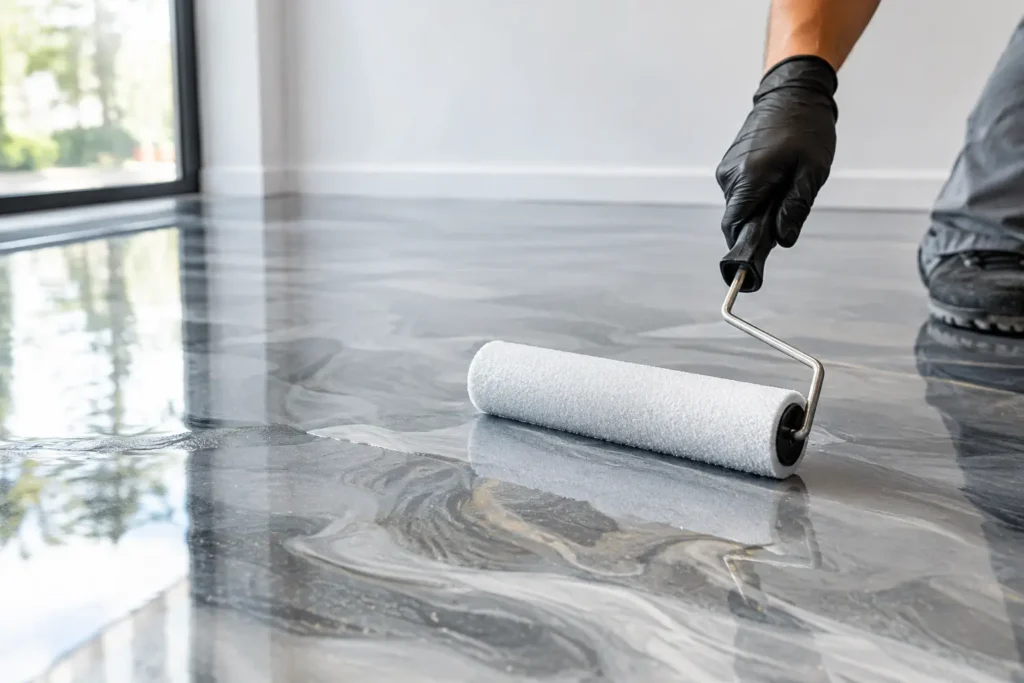
A good metallic epoxy review should look beyond the striking photographs. The real question is whether the finish will still feel right when it is under your feet every day: beneath kitchen stools, through a busy hallway, in a reception area, or across a showroom designed to make an impression. Metallic epoxy can be extraordinary, but it is not a one-size-fits-all floor. Its success depends on the space, the preparation beneath it and the skill used to create it.
Unlike a printed pattern or repeat tile, metallic epoxy has movement. Pigments are worked through resin to form waves, clouds, veining and depth that shift with the light. The effect can be subtle and stone-like, or rich, dramatic and almost liquid. That individuality is its greatest appeal, yet it also calls for clear design decisions before installation begins.
Metallic epoxy review: the finish and feel
Metallic epoxy is a seamless decorative resin surface, usually built over a correctly prepared concrete or screeded subfloor. Specialist metallic pigments are introduced into the coating, then manipulated while the material is still workable. Once cured, the floor becomes a continuous surface with no grout lines, joints or repeated tile layout to interrupt the design.
The visual result is difficult to replicate with conventional flooring. Soft silver, pearl, graphite and smoky tones can create a calm contemporary base for an open-plan interior. Bronze, copper, deep blue or charcoal combinations can give a bar area, boutique, salon or feature room a more theatrical identity. Because every application responds differently to pigment, movement and light, no two floors are exactly alike.
That said, metallic does not have to mean high-gloss or flamboyant. A gloss finish intensifies depth and reflection, making it ideal for spaces intended to feel polished and expressive. Satin and more restrained systems can soften the reflection, offering a refined architectural finish that sits more quietly alongside timber, plaster, stone and brushed metal.
This is also why samples matter. A small board allows you to assess colour direction, sheen and pigment movement, but it cannot reproduce every sweep of a full room. The surface should be approached as crafted artwork rather than a uniform manufactured product. For clients who need a perfectly repeated appearance, large-format porcelain or a tightly controlled solid-colour resin may be the better choice.
Where a metallic epoxy floor works best
Metallic epoxy earns its place where a floor is part of the design story. In a hallway, it can turn the first few steps into a statement. In a kitchen-diner, the seamless finish creates a clean visual connection between cabinetry, islands and living zones. In bathrooms, it offers a contemporary alternative to tiles, provided the correct anti-slip specification and waterproofing details are considered.
Commercially, it is particularly effective in customer-facing spaces. Retail units, studios, hospitality venues, salons and reception areas can use a bespoke floor to reinforce their identity from the moment visitors enter. A well-chosen palette can feel luxurious without competing with merchandise or furnishings.
For garages, workshops and warehouses, decorative metallic epoxy is not always the most sensible answer. It can perform well when specified correctly, but a heavy-duty industrial resin system may be more appropriate where impact, tyre traffic, oils, loading and frequent abrasion are the dominant concerns. The right choice is based on how the space is used, not simply which finish looks most dramatic.
Durability: what to expect in everyday use
A professionally installed epoxy system forms a hard, continuous surface that is well suited to daily foot traffic. It is easy to wipe clean, does not have grout to discolour and can resist many common spills when they are dealt with promptly. These qualities make it attractive for busy family homes and design-led commercial interiors alike.
Durability is not just a property of the topcoat. It begins with the substrate. Concrete moisture, cracks, contamination, uneven areas and movement joints all need proper assessment before resin is applied. Applying a beautiful coating over an unsuitable base risks failure later, from bubbling and delamination to cracks reflecting through the finished surface.
A metallic floor can also be specified with protective topcoats designed to improve scratch resistance, stain resistance and UV stability. This matters in bright rooms with extensive glazing, where direct sunlight may affect some resin finishes over time. No floor is completely immune to wear, however. Dragging furniture, grit beneath shoes and sharp objects can mark any decorative surface, particularly a darker or glossier one where fine scratches may show more readily.
For homes with children, pets or frequent entertaining, a satin finish and an appropriate protective layer often strike a more forgiving balance than mirror-like gloss. In commercial settings, entrance matting and sensible cleaning routines protect the appearance of the floor far more effectively than reactive repair work.
The practical trade-offs behind the shine
The seamless nature of metallic epoxy is often described as low maintenance, and that is fair. Regular vacuuming or sweeping removes abrasive grit, while a pH-neutral cleaner and soft mop will usually handle routine cleaning. There are no tile joints to scrub and no seams that collect dirt.
Low maintenance should not be confused with no maintenance. Harsh chemicals, abrasive pads and steam cleaning without professional guidance can dull or damage the protective finish. Spills should be cleaned rather than left to sit, especially oils, strong dyes and products with aggressive solvents. A quality installation comes with clear advice on cleaning products and care.
Slip resistance is another area that deserves an honest conversation. A glossy resin floor can become more slippery when wet, just as polished tile can. In bathrooms, entrances, kitchens used intensively for cooking or commercial spaces exposed to wet footwear, an anti-slip aggregate or textured topcoat may be appropriate. This adds grip, but it can slightly change the smooth visual feel and make cleaning more involved. It is a worthwhile trade-off when safety is the priority.
There is also the matter of installation time. Resin is not generally a same-day cosmetic upgrade. Subfloor preparation, repairs, primers, base layers, decorative application and curing all take time. The exact programme depends on the existing floor, the chosen system and site conditions. Rushing preparation to save a day is one of the easiest ways to compromise a finish intended to last.
Cost and value in a metallic epoxy review
Metallic epoxy is a premium, bespoke surface rather than a budget alternative to standard flooring. Cost varies considerably according to floor condition, area size, moisture control, access, design complexity, topcoat choice and whether skirting, thresholds or adjoining surfaces need attention. Smaller rooms can sometimes carry a higher price per square metre because the same preparation and mobilisation are required across less area.
It is tempting to compare only the installed price against tiles, vinyl or laminate. A more useful comparison considers visual longevity, cleaning, repair expectations and the value of a finish tailored to the space. A statement surface can change the perceived quality of an interior in a way that an off-the-shelf material rarely does.
The cheapest quote is rarely the clearest indication of value. Ask what preparation is included, how moisture is assessed, which resin system is being used, what level of slip resistance is proposed and how the decorative effect will be agreed. Good installers explain the limitations as confidently as the benefits. They should also be comfortable discussing samples, expected variation and aftercare before work begins.
Is metallic epoxy the right choice for your project?
Choose metallic epoxy when you want a continuous, made-for-your-space finish with genuine visual depth. It is particularly compelling when the floor needs to contribute to the atmosphere of a room rather than fade into the background. It suits clients who appreciate handcrafted variation and want colour, movement and sheen to be considered alongside practical performance.
Consider another system if you prefer a completely uniform look, need the highest possible industrial traction, or expect heavy impact and machinery use without a protective specification. Similarly, if the subfloor is unstable or moisture issues have not been resolved, the right next step is investigation and repair, not decorative coating.
The strongest projects begin with a conversation about how the room will live and work. At Resinize, that means balancing artistry with the preparation, detailing and finish specification that give a surface its staying power. A metallic epoxy floor should never merely photograph well on installation day. It should continue to make the space feel considered, distinctive and confidently yours long after the resin has cured.