
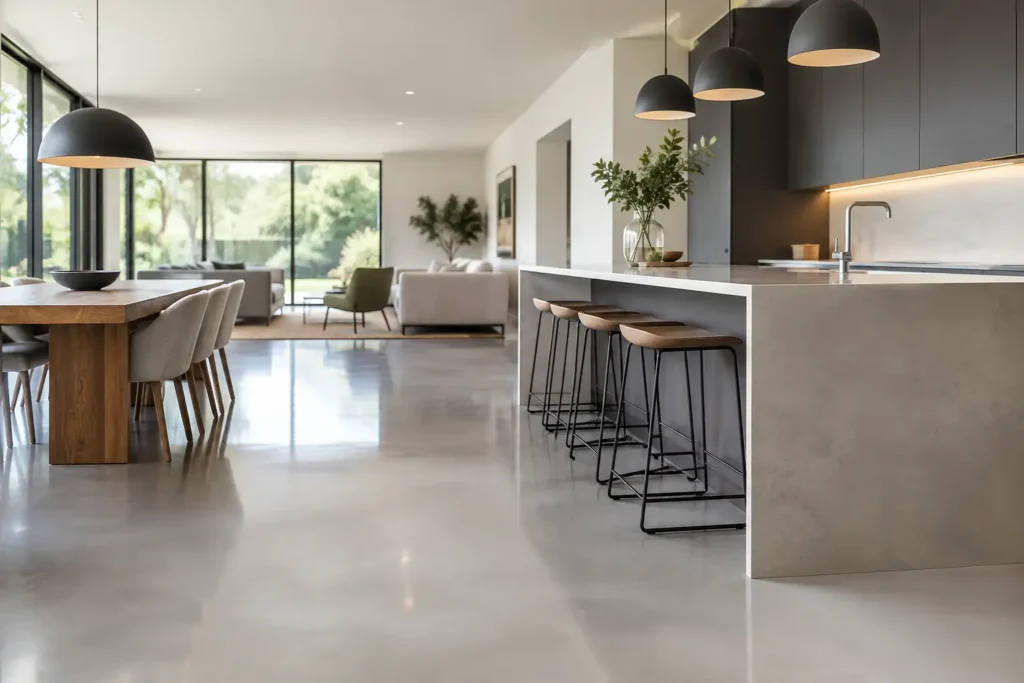
A floor can either disappear into a room or set the entire mood before the furniture is even in place. This Essex resin flooring guide is for homeowners and commercial decision-makers who want the second outcome: a continuous, considered surface that brings colour, texture and practical performance together.
Resin flooring is often associated with hard-working garages and industrial settings, and it can certainly perform there. Yet its appeal has moved far beyond utility. In a kitchen, hallway, bathroom, retail space or studio, a bespoke resin finish can create the calm of a seamless backdrop, the character of terrazzo, or the movement and depth of an artistic statement floor.
What resin flooring can bring to a space
Resin flooring is a liquid-applied surface system that cures into a continuous finish. Unlike tiles, planks or individual slabs, there are no grout lines or repeated joints cutting across the room. That visual clarity is a major part of its appeal, particularly in open-plan interiors where several zones need to feel connected.
The design possibilities are broad, but the right choice begins with the feeling you want to create. A soft concrete-effect surface can give a contemporary kitchen or garden room an understated architectural quality. Terrazzo-inspired resin can introduce flecks of colour and a more expressive, crafted finish. Metallic resin creates movement, depth and light play, making it particularly effective for feature spaces, bars and showpiece commercial interiors.
Practical benefits matter just as much. A properly specified resin floor is easy to clean, comfortable with everyday footfall and resistant to many common spills. It can also be finished with a texture or aggregate to improve grip where required. The result is not simply a decorative layer, but a surface designed around how the space will actually be used.
Choosing the right resin finish
There is no single best resin floor. The strongest specification depends on the setting, the existing substrate and the level of visual detail you want. A family kitchen has different demands from a warehouse loading area, while a bathroom requires a more deliberate approach to slip resistance and waterproof detailing.
Decorative epoxy and terrazzo-inspired resin
Decorative epoxy is an excellent choice where individuality is central to the brief. Pigments, flakes, stone-like chips and hand-worked effects can be combined to produce a finish with genuine variation. Terrazzo-inspired systems offer the character of a premium aggregate floor while retaining the continuous, contemporary quality of resin.
These finishes suit entrance halls, kitchens, salons, retail environments and hospitality spaces. They are especially effective where a room needs its own identity without relying on busy patterns or numerous materials.
It is worth remembering that handcrafted movement is part of the appeal. Samples are essential, but a finished floor will not be a photocopy of a small swatch. Light, room scale and the application process all influence the final expression. For clients who value a surface with personality, that is a benefit. For those seeking absolute uniformity, a quieter single-colour system may be more appropriate.
Concrete-effect resin
Concrete-effect resin captures the restrained, tonal appearance of polished concrete without necessarily requiring a poured concrete floor. It works beautifully with timber, brushed metal, warm lighting and natural fabrics, bringing balance to interiors that need a clean but not clinical foundation.
This finish is popular in kitchens, living areas, studios and contemporary commercial spaces. Subtle tonal changes can make a large floor feel refined rather than flat, although the final look should be discussed in the context of daylight, cabinetry and wall colours.
Metallic resin
Metallic resin is a more expressive choice. Pigments are manipulated during installation to create flowing, mineral-like depth, ranging from smoky charcoal and pewter to rich bronze, oceanic blue or dramatic black. No two installations are identical.
It is best used intentionally. In a compact cloakroom, reception space, home bar or feature wall, metallic resin can create a memorable focal point. Across a large family home, a calmer palette may offer more longevity. The question is not whether the finish is striking, but whether it belongs to the wider interior scheme.
Heavy-duty commercial coatings
For garages, warehouses, workshops, commercial kitchens and high-traffic retail settings, performance takes priority alongside appearance. Heavy-duty resin systems can be designed for abrasion resistance, chemical exposure, cleanability and safety underfoot.
The finish still does not need to feel purely industrial. Colour zoning, decorative flakes and clearly defined walkways can support a company’s brand while helping the environment work harder. The key is specifying the system for the traffic, machinery, cleaning regime and operational requirements, rather than selecting on colour alone.
An Essex resin flooring guide to room suitability
Resin is versatile, but every room asks something different of it. In kitchens and hallways, the principal advantages are continuity, easy cleaning and resilience against daily use. A mid-tone or lightly textured finish can be forgiving of small marks, muddy shoes and the rhythm of family life.
Bathrooms benefit from the absence of grout lines, which can make the space feel larger and calmer. However, bathroom floors need careful preparation around drainage, shower zones, edges and slip resistance. The best result comes from treating the floor, walls and junction details as one coordinated surface design, not as separate finishes.
Garages and utility areas demand a more technical conversation. Consider tyre heat, oil, tools, moisture coming through the slab and the type of traffic the floor will take. A domestic garage and a commercial workshop may look similar at first glance, but their coating requirements can differ significantly.
For retail, hospitality and office spaces, resin offers a valuable combination of visual impact and practical maintenance. It can carry a brand’s colour palette across a floor, create a polished customer-facing environment and cope with regular footfall. Acoustic comfort should also be considered in busy rooms, as resin is a hard surface and may benefit from rugs, furnishings or acoustic treatments elsewhere in the scheme.
The installation process: preparation shapes the finish
The artistry of resin is visible at the end, but the quality of the work begins below the surface. Successful installation depends on a stable, clean and suitably dry substrate. Existing concrete may require mechanical preparation to remove weak material, old coatings, contaminants or laitance. Cracks and imperfections need to be assessed and repaired before the decorative layers begin.
Moisture is one of the most significant factors. If a concrete slab has excessive moisture vapour, it may require a suitable damp-proof membrane or another remedial approach. Skipping this stage can compromise adhesion and lead to avoidable problems later. This is why an on-site assessment is more valuable than making decisions from photographs alone.
Once preparation is complete, the system is built in layers. Depending on the specification, this may include a primer, base coat, decorative layer, protective seal coat and an anti-slip finish. Each layer needs appropriate curing time, so resin flooring is not usually a one-afternoon transformation. Access should be planned around the room’s use, surrounding trades and the time needed before the surface can take full service.
Temperature and humidity can also influence installation. In Essex and London properties, this becomes particularly relevant in extensions, ground-floor rooms and spaces that are not yet fully heated or weather-tight. Good scheduling protects both the finish and the programme.
Colour, texture and sheen: details that change everything
Samples should be viewed in the actual room wherever possible. Natural light may make a cool grey appear blue, while warm evening lighting can deepen neutral tones and bring metallic pigments to life. A sample is a starting point for a conversation, not simply a box to tick.
Sheen deserves equal attention. A high-gloss surface can amplify light and create a dramatic, luxurious feel, but it may also show dust, footprints and fine marks more readily. Satin and matt finishes tend to feel softer and more forgiving in busy domestic spaces. In wet or commercial areas, texture may be introduced for grip, with the understanding that more texture can require slightly more attentive cleaning.
The right finish is usually the one that balances the room’s aesthetic ambition with its real daily behaviour. A pristine white floor may suit a carefully controlled gallery setting; a layered neutral with gentle movement may be a wiser choice for a home with children, pets and a garden entrance.
Caring for a resin floor
Resin floors are straightforward to maintain, not maintenance-free. Regular sweeping or vacuuming removes abrasive grit, while a damp mop and a pH-neutral cleaner will handle most routine cleaning. Avoid harsh solvents, strongly alkaline products and scouring pads unless they are specifically approved for the installed system.
Felt pads beneath furniture and sensible protection during building work will help preserve the finish. In commercial settings, cleaning products and methods should be matched to the coating specification. If the floor begins to lose its desired sheen after years of use, a professional refresh or recoat may restore its appearance without replacing the entire surface.
A bespoke resin floor should feel considered from the first sample through to the way it lives with you. Whether the aim is a calm concrete-effect kitchen, a terrazzo-inspired hallway or a hard-working commercial floor with a stronger visual identity, the most successful projects begin with honest conversations about use, light and detail. That is where a design-led installer such as Resinize can turn a practical surface into part of the architecture of the space.