
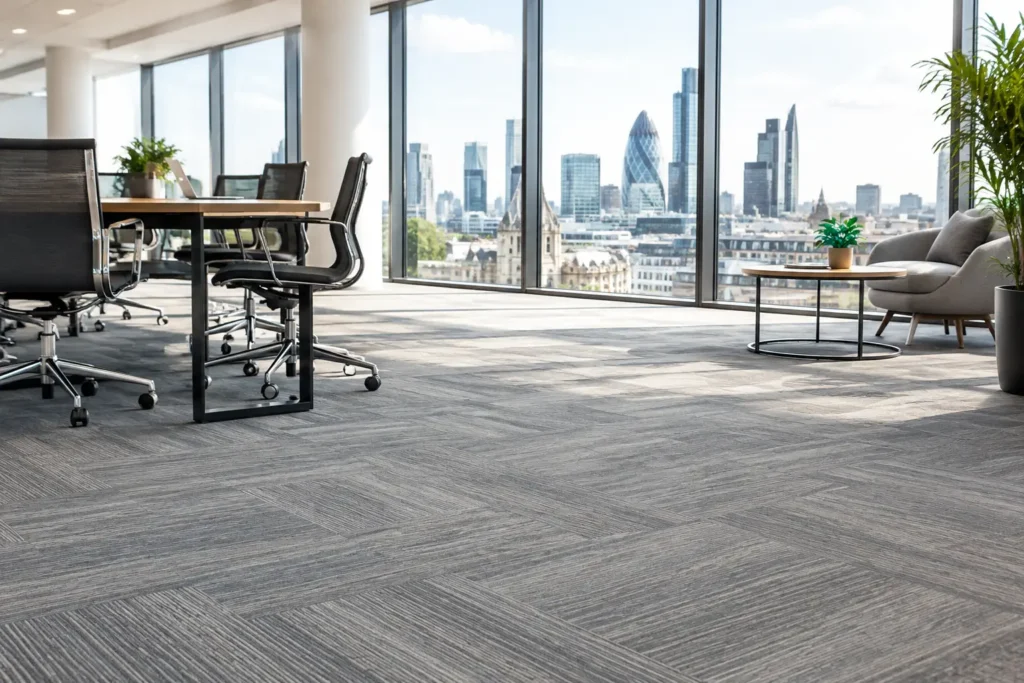
At 8.45am, an office floor has already dealt with wet shoes, coffee runs, delivery trolleys and the first wave of people crossing from reception to desks. That is why a London office flooring example should be judged by more than a finish sample held up to the light. It needs to look considered at the entrance, perform through the working day and continue to represent the business when clients arrive.
For design-led workplaces, resin offers an opportunity to make the floor part of the interior identity rather than a background material. Its continuous surface, depth of colour and ability to incorporate subtle texture can bring a composed, architectural quality to spaces that must also work hard.
A London Office Flooring Example: The Brief
Imagine a growing creative consultancy occupying the ground floor of a converted warehouse in East London. The office includes a reception area, an open-plan studio, two meeting rooms, a kitchenette and a short corridor leading to the facilities. High ceilings, black-framed glazing and exposed services give the shell plenty of character, but the existing floor is uneven, stained concrete.
The team does not want a generic grey carpet tile scheme or a glossy finish that feels more suited to a showroom than a working studio. They need a surface that complements the building, withstands regular footfall and is straightforward for the cleaning team to maintain. They also want the reception to make an immediate impression without creating a visual divide between the public-facing and working areas.
The strongest response is not necessarily one identical finish everywhere. It is a joined-up floor strategy, with the same underlying material language adapted to the purpose of each zone.
Reception: creating a confident first impression
For reception, a terrazzo-inspired resin overlay in warm stone, chalk and charcoal tones would create a refined arrival point. The aggregate can be selected to echo the pale timber joinery and brushed metal details elsewhere in the scheme, giving the space depth without relying on a loud pattern.
A resin terrazzo finish is particularly effective here because it feels crafted and distinctive while remaining seamless. Unlike tiled surfaces, there are no grout lines to interrupt the visual field or become a focal point for dirt. Visitors experience a clean, continuous plane from the moment they step inside.
The choice of sheen matters. A high-gloss floor can look striking in a carefully lit photograph, but it may show scuffs, dust and reflected ceiling services more readily. For this office, a satin finish is the more balanced choice: elegant enough for a client-facing setting, yet practical for daily use.
Studio: a calmer surface for concentrated work
In the open-plan studio, a concrete-effect resin floor in a soft mineral grey could continue the visual story with a quieter character. This is not about imitating unfinished concrete exactly. A well-crafted resin finish can retain the tonal movement and contemporary restraint people appreciate in concrete, while providing a more controlled, sealed surface.
The colour should be tested against the natural light at different times of day. North-facing light can make a cool grey feel severe, while strong southern light may make it appear much paler than expected. Sample-led decisions are essential, particularly in London offices where glazing, surrounding buildings and artificial lighting all influence how a floor reads.
A mid-tone finish often gives the best long-term result in a busy studio. Very pale floors can reveal marks quickly, while near-black surfaces may highlight dust and tracked-in debris. A nuanced grey, softened with warmer undertones, disguises the ordinary evidence of a productive day without looking dull.
Designing for movement, not just appearance
The success of office flooring lies in how people move across it. Reception may receive sporadic bursts of traffic, while the route between desks, meeting rooms and the kitchenette experiences repeated daily wear. Chair castors, laptop bags and mobile storage units place different demands on the floor from foot traffic alone.
A professionally specified resin system can be built to suit these conditions. Surface preparation is central to the result. The substrate must be assessed for soundness, moisture and existing coatings before installation begins. Resin does not conceal every underlying issue by magic; thoughtful preparation is what allows a finished surface to look precise and perform reliably.
In this example, the team would also consider acoustic comfort. Resin is a hard surface, so it will not absorb sound in the way carpet does. In an office with exposed ceilings and lots of glazing, that matters. The answer is not automatically to reject resin, but to balance it with acoustic wall panels, upholstered seating, curtains or rugs in informal zones. Good interiors are made through combinations of materials, not one material attempting to solve every problem.
Meeting rooms and kitchenettes need their own response
Meeting rooms benefit from continuity, but they can carry a more tailored expression. The concrete-effect resin used in the studio could flow into these spaces, then be paired with a large rug beneath the table to soften acoustics and define the room. This retains the sense of a considered whole while giving conversations a more comfortable setting.
The kitchenette needs a stronger focus on cleanability and slip resistance. A decorative epoxy coating in a complementary shade, specified with an appropriate anti-slip texture, would be a sensible choice. This is a detail worth handling carefully. Too little texture can be unsuitable where spills occur; too much can make routine cleaning harder. The right finish depends on how the kitchenette is used, the footwear expected on site and the cleaning regime.
For areas near entrances, a recessed barrier mat is also a worthwhile part of the design. It protects the resin from grit and moisture before they travel further into the office. A beautiful floor benefits from practical planning at the threshold.
Why seamless flooring changes the feel of an office
There is a visual calm to a floor without joins, thresholds or repeated module lines. In a compact office, this can make the footprint feel more generous. In a larger one, it gives the interior a stronger sense of direction and continuity.
That quality has commercial value. A distinctive reception supports brand perception. A well-finished studio feels more intentional to prospective clients and future hires. For businesses that host workshops, presentations or content shoots, the floor becomes part of the setting rather than something to hide.
Resin also offers flexibility beyond a single colour. Fine aggregates, tonal layering, metallic details and custom pigment blends can produce finishes ranging from restrained and architectural to expressive and artistic. The best choice is the one that strengthens the office identity, not the one that competes with every other design element.
The practical questions to ask before specifying resin
Resin flooring is a premium, project-specific surface, so clarity at the briefing stage saves time later. Discuss the existing substrate, expected traffic, whether the office will remain occupied during works, and how much time is available for curing before furniture returns. Programme planning is especially important in central London, where access, loading restrictions and lift availability can shape the installation process.
It is also sensible to be honest about maintenance. Resin is easy to care for with an appropriate regular cleaning routine, but no floor is entirely immune to wear. Abrasive grit should be controlled, felt protection should be added beneath movable furniture, and harsh cleaning products should be avoided unless they are compatible with the selected system. Over time, a floor that sees intense use may benefit from professional assessment or renewal of its protective finish.
Colour samples should always be viewed in the real space, not selected solely from a screen. Ask how the surface will respond to direct sunlight, LED lighting and the tones of adjacent walls, furniture and joinery. This is where craftsmanship and design guidance make a tangible difference: the finish is considered as part of the room, not supplied as an isolated product.
A floor with a role in the workplace
The most successful office surfaces do more than tolerate the working day. They set the tone for it. In this London office flooring example, the reception makes a polished introduction, the studio feels calm and creative, and practical zones are equipped for the messier moments of everyday use.
Whether the brief calls for quiet concrete effects, terrazzo-inspired detail or a bolder decorative statement, start with the habits of the people who will use the space. From there, the right resin finish can turn an ordinary foundation into one of the office’s most memorable design decisions.