
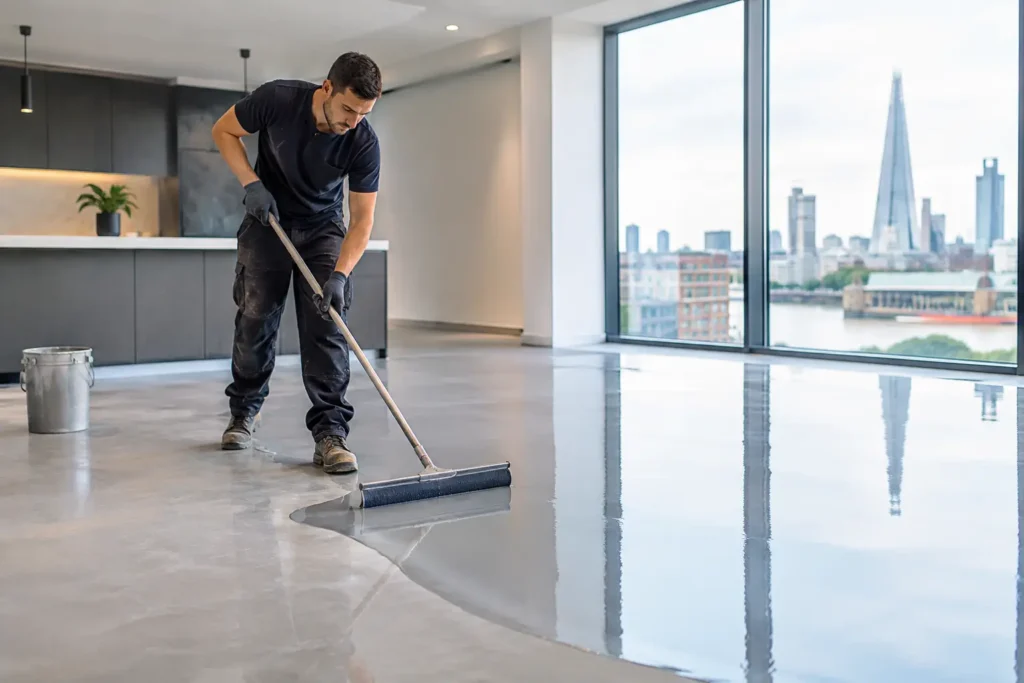
A resin floor can make a narrow hallway feel calmer, turn a tired garage into a considered extension of the home, or give a retail interior a surface with real presence. But the finished effect depends on far more than choosing a colour from a chart. The best London resin installers combine design judgement with disciplined preparation, specifying a surface that suits the building, the light, and the way the space will actually be used.
Resin is often described as a practical alternative to tiles, vinyl or polished concrete. It can certainly be that. Yet its real appeal lies in the freedom it gives a project: uninterrupted surfaces, tailored tones, subtle movement, terrazzo-inspired aggregate and dramatic metallic effects can all be crafted around an interior rather than imposed upon it.
What a quality resin installation really involves
A beautiful resin surface begins below the visible finish. Existing concrete, screed, timber and tiled floors all present different considerations. Their condition, movement, moisture levels and levels of contamination affect the preparation method and the resin system that can be used safely.
A professional installer does not simply coat over a floor because it appears sound. They assess cracks, weak areas, old adhesives and previous coatings, then establish whether mechanical preparation, repairs, priming or a levelling layer is required. This early work is rarely the most glamorous part of a project, but it is where longevity is won or lost.
The same principle applies to walls. Decorative resin wall finishes need a suitably stable, clean background and a clear design intention. A high-gloss metallic treatment can create a striking focal point in a reception area or bathroom, while a softly textured concrete-effect finish can add depth without overwhelming the room. The installer should understand how the chosen finish will behave under natural light, spotlights and day-to-day contact.
Resin is a system, not a single product
The term “resin floor” covers a wide family of finishes. Epoxy is often chosen for decorative depth, colour and hard-wearing performance. Polyurethane systems can offer greater flexibility and comfort underfoot in certain applications. Commercial coatings may include extra build, anti-slip texture or chemical resistance where the environment demands it.
That is why a good specification starts with questions, not assumptions. Is the space a kitchen with frequent spills, a bathroom exposed to moisture, a busy showroom, or a warehouse receiving pallet lorries? Will it need a soft matt appearance, a reflective polished look, or a textured finish for improved grip? A surface designed for a calm living room may not be right for a working garage, even if both are technically resin.
How to choose London resin installers with confidence
When comparing London resin installers, look beyond a gallery of finished floors. Strong imagery matters, particularly for a design-led material, but it should be supported by evidence of careful process and an ability to explain the choices behind the work.
Start by asking how the installer will assess your existing substrate. A considered answer should cover preparation, moisture and repair, rather than moving immediately to colours and finishes. If a contractor promises a flawless result without inspecting the floor or requesting clear site information, that should raise questions.
It is also worth asking for samples. Resin has a physical quality that photographs cannot fully capture. A pale neutral may appear warmer or cooler depending on the daylight in your room. Metallic pigments can shift with the viewing angle. Decorative flakes and terrazzo-style aggregates have scale and texture that need to be seen in context. A sample-led conversation gives you the chance to refine the balance between visual impact and restraint before work begins.
Experience across both residential and commercial settings is another useful indicator. Domestic projects call for sensitivity to existing interiors, tidy working and an eye for proportion. Commercial sites may require tougher performance criteria, programmed installation windows and a clear understanding of operational demands. An installer who can navigate both has a broader grasp of where appearance and performance must meet.
Questions worth asking before you commit
You do not need to become a coatings specialist to make a sound decision. Ask what resin system is proposed and why it suits your space. Clarify what preparation is included, how cracks or unevenness will be handled, and whether moisture testing is needed before installation.
Discuss the intended sheen and texture as well. High-gloss surfaces can look exceptional in the right setting, particularly where there is controlled lighting and a desire for reflection. They may, however, reveal dust, water marks and small scuffs more readily than a satin or matt finish. A lightly textured commercial coating can improve traction, but may require more attention when cleaning than a completely smooth floor.
Finally, ask about curing time and access. Resin is installed in stages, and every layer needs appropriate conditions to cure correctly. The practical programme matters in a family home, shop or working premises. Rushing re-entry can compromise a surface that has been crafted to last.
Matching the finish to the room
The strongest resin interiors feel intentional. Rather than treating the floor as an afterthought, consider it as a continuous architectural plane that connects joinery, wall colour, lighting and furniture.
For kitchens and open-plan living spaces, a warm neutral resin can replace visual clutter with a quiet, expansive backdrop. Its lack of grout lines makes the room feel more generous, while the colour can be tuned to sit alongside timber, stone or painted cabinetry. Terrazzo-inspired overlays introduce more character, bringing the familiar charm of aggregate flooring into a lighter, more adaptable contemporary composition.
Bathrooms benefit from resin’s seamless appearance, especially where the aim is a calm, spa-like atmosphere. The key is specifying the correct system, preparing the background properly and giving careful attention to water management, junctions and slip resistance. Resin should complement a sound waterproofing strategy, not substitute for one.
Garages and workshops call for a more performance-led approach. Here, resistance to abrasion, impact, oils and regular cleaning may take priority over decorative complexity. That does not mean the finish must look industrial. A well-chosen solid colour, flake system or subtle decorative coating can make a practical area feel purposeful and polished.
In retail, hospitality and office environments, resin can become part of the brand experience. A statement entrance floor, a coloured walkway or a richly layered feature wall gives customers an immediate sense that the space has been designed with care. The right choice still needs to account for footfall, cleaning routines and the realities of daily trade.
The trade-offs behind a flawless-looking floor
Seamless does not mean maintenance-free. Resin is straightforward to care for when the correct finish is selected and cleaning is consistent, but every surface shows wear differently. Grit brought in from outside, dragged furniture and harsh cleaning chemicals can dull or mark any decorative floor over time.
Simple habits preserve the finish: use entrance mats where appropriate, fit protective pads beneath furniture and clean with products suited to the installed system. In busy commercial areas, a planned maintenance routine is part of protecting the original design intent.
There is also a balance between character and uniformity. Hand-applied decorative resin has an artisan quality. Pigment movement, tonal variation and the distribution of aggregates are part of what makes it distinctive. If you want a perfectly repeated, factory-made pattern, another material may be more suitable. If you value an individual surface with depth and visual movement, resin offers possibilities few finishes can match.
Why workmanship matters more than a low initial quote
A low quote can overlook the hidden stages that protect a resin installation: substrate preparation, repairs, primers, levelling, edge detailing and curing time. These elements affect not only how the floor looks on completion, but how it performs months and years later.
At Resinize, the approach is centred on crafting surfaces that feel personal to the setting while meeting the practical demands beneath them. That may mean creating a restrained concrete-effect floor for a contemporary home, or building a heavier-duty coating system for a hard-working commercial space. The material changes, but the attention to preparation and finish quality should not.
The most successful resin project is not simply the one that photographs well on installation day. It is the one that still feels right when the room is lived in: when shoes cross the hallway, stock moves through the shop, or morning light catches the surface and makes the whole space feel newly considered. Choose an installer who treats that lasting impression as part of the craft.